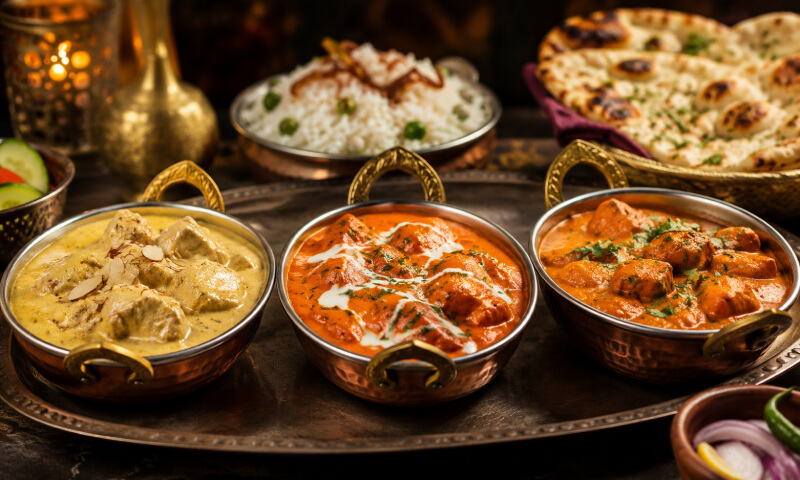
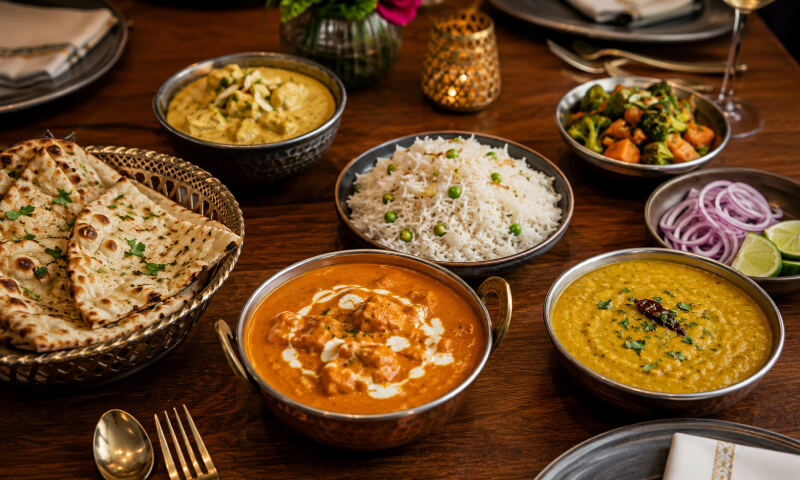
If you don’t like heat, order a korma, a butter chicken, a paneer butter masala or a malai kofta, with plain butter naan and jeera rice. All are creamy, gentle and contain little or no chilli. Say mild when you order. Skip anything called vindaloo, madras, jalfrezi, karahi or laal maas. You’ll be fine.
You’re not being difficult
Let’s get this out of the way first, because we think it’s why a lot of people arrive at an Indian restaurant already tense.
Not liking chilli isn’t a character flaw or something to grow out of. Tolerance for capsaicin is partly built up and partly just how you’re wired, and some people genuinely feel pain where others feel warmth. If your friends have made a joke of it for years, ignore them. You’re a paying customer and you’re allowed to eat food you enjoy.
We’ve cooked on Margaret Street since 2014, and a decent slice of our regulars order mild every single time. Nobody in the kitchen thinks anything of it.
The one thing that would fix all of this: spice is not heat
Here’s the misunderstanding underneath the whole problem.
Spices are the seeds, barks, roots and leaves that flavour the food. Cumin, coriander seed, cardamom, cinnamon, cloves, turmeric, fenugreek, mustard seed, bay leaf. None of them are hot. They’re aromatic. Cinnamon in a curry does the same thing cinnamon does in a hot cross bun.
Heat comes from one ingredient: chilli. Chilli contains capsaicin, which triggers the same nerve receptors that respond to actual burning, which is why your brain reads it as pain rather than flavour.
So a curry can be loaded with spice and have almost no heat, and that’s exactly what a korma is. When you say “I don’t like spicy food”, what you almost certainly mean is “I don’t like chilli”. Those are very different requests, and the second one is easy to work with. There’s an enormous amount of Indian cooking with no chilli in it at all.
The safe list
These are the dishes we’d put in front of someone who’s nervous. Not compromises, just genuinely gentle food.
Vegetable Korma or Beef Korma. The mildest thing we cook. Cashew paste, cream and warm whole spices, with no tomato and no chilli. No acidity either, which matters for people who find butter chicken a bit sharp. The vegetable version is the better dish.
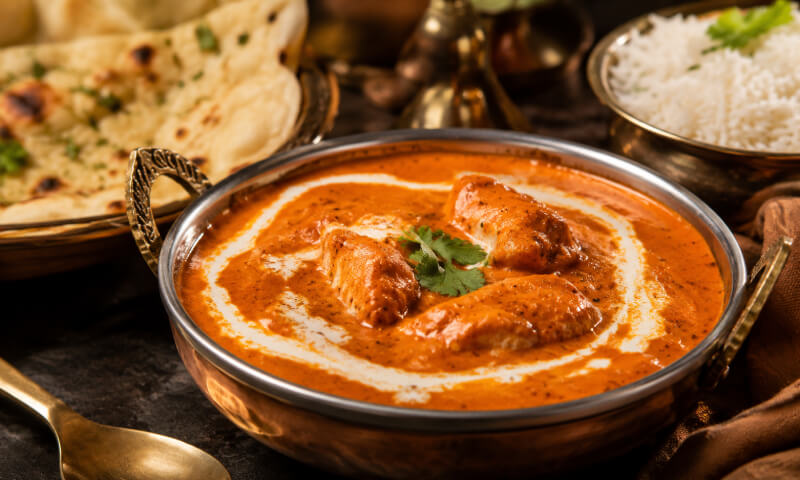
Butter Chicken. Tandoor-cooked chicken in a smooth tomato, butter and cream gravy. Slightly sweet. The Kashmiri chilli in it is for colour rather than heat.
Mango Chicken. The sweetest thing on the menu. Not traditional, and we’re honest about that, but it gets nervous eaters and children over the line.
Paneer Butter Masala. The vegetarian equivalent of butter chicken. Paneer is a fresh Indian cheese, mild and milky with a firm texture. If you like halloumi you’ll be at home. Shahi Paneer sits in similar territory.
Malai Kofta. Vegetable and paneer dumplings in a creamy gravy. Rich, no bite at all, probably the most comforting dish we make.
Plain Butter Naan. Warm bread. Nothing to fear. Garlic naan is mild too.
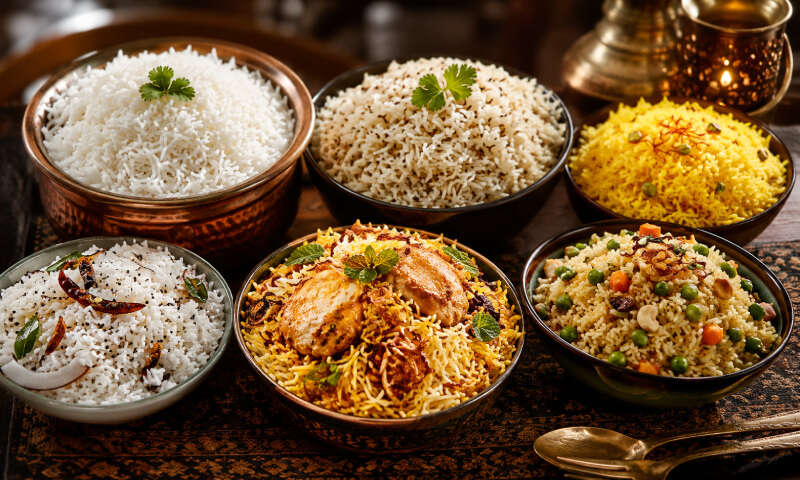
Jeera Rice. Basmati with cumin seeds through it. Cumin is aromatic, not hot. Steamed and coconut rice are equally safe.
Gulab Jamun for dessert. Warm milk dumplings in sugar syrup, and a very effective way to end a meal if anything did get away from you.
What to steer around
Names to treat as a red flag on any Indian menu, ours included.
- Vindaloo. Hot and sour. Not the place to start.
- Madras. Coconut based, which sounds gentle and isn’t. Genuinely hot.
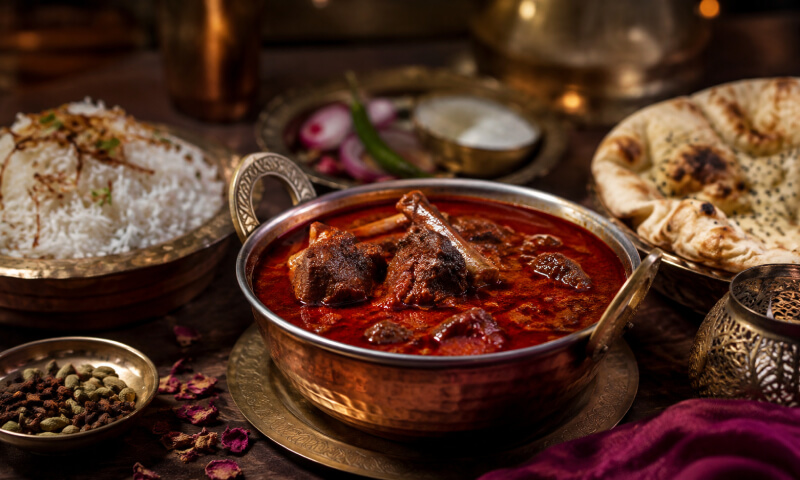
- Laal Maas. The hottest thing we serve. Rajasthani lamb built on dried red chilli.
- Jalfrezi and Karahi. Green chilli and black pepper. Medium to hot.
- Anything with “chilli” in the name. Chilli Paneer Dry and Chilli Chicken Dry are exactly what they sound like.
- Dhansak. Sweet at first, then hot. The delayed arrival catches people out.
Also worth knowing: pickle and chutney on the table are not all mild. Mango chutney is sweet and safe. Lime pickle is not. Raita, which is yoghurt with cucumber, is entirely safe and actively helpful.
There’s a full ranking of every dish we serve in our heat level guide if you want to check something specific before you go.
How to ask for mild without feeling awkward
You don’t need a speech. “Mild, please” does it. So does “I’m not great with chilli, can you keep it gentle?” or “can you do that with no chilli at all?”
That last one is worth knowing about. Mild is a level of chilli, not the absence of it. If you want zero, say zero. We can do that for nearly everything on our menu.
Two more things that help. Ask when you order, not when the food arrives. And if you’re the only one at a mixed table who wants mild, tell the waiter yourself rather than letting a friend order for you and hoping. It takes four seconds and saves the whole evening.
One honest caveat. If you order a vindaloo mild, you’ll get a vindaloo with less chilli. It’ll still be hot and sour, because that’s what the dish is. Better to change dishes than to try to sand the edges off a hot one. Our types of curry guide explains why some dishes can shift and others can’t.
If a dish arrives too hot
It happens. Here’s what actually works, and it’s not what most people reach for.
Do: eat plain rice. Eat yoghurt, or raita, or a lassi. Eat a plain piece of naan. Milk works too.
Don’t: drink water. Don’t drink beer. Don’t drink a soft drink.
The reason is chemistry. Capsaicin, the compound in chilli, is not water soluble. It’s fat soluble. Water spreads it around your mouth and moves on without taking any of it with you, which is why the relief lasts about two seconds and then it’s worse.
Dairy works because of casein, a protein in milk that binds to capsaicin and lifts it off the nerve receptors. That’s not a folk remedy, it’s why yoghurt sits on Indian tables everywhere hot food is eaten. Full-fat works better than low-fat.
Rice and bread work differently again. They’re not neutralising anything, they’re physically absorbing and diluting, and giving your mouth something else to do.
Beer is the interesting one. It feels like the right answer and it’s close to the worst. It’s mostly water, the carbonation makes the burn sharper, and alcohol at beer strength doesn’t dissolve enough capsaicin to matter. We’re a licensed bar and we’ll pour you one happily. Just have the lassi first.
Sugar helps a bit too, which is why a gulab jamun at the end of a hot meal is more than a nice idea.
Ordering for a table where one person can’t take heat
This is the situation that goes wrong most often, so here’s how to do it properly.
Don’t compromise into the middle. The instinct is to order everything at medium so it works for everybody. It works for nobody. The heat-lover gets a bland meal, the mild eater still finds it too hot, and every dish tastes like the same amount of nothing.
Order at the extremes. Get one genuinely mild dish and one genuinely hot one, plus something in the middle. Everyone serves themselves from what suits them and the table is more interesting for it.
Order more rice than seems necessary. Rice is the dial. It lets anyone take a hot dish and soften it on their own plate, without having to negotiate.
Get a raita. Cheapest insurance on the menu, and it makes the hot dishes reachable for someone who wouldn’t otherwise touch them.
Put the mild dish next to them. Sounds trivial. Isn’t.
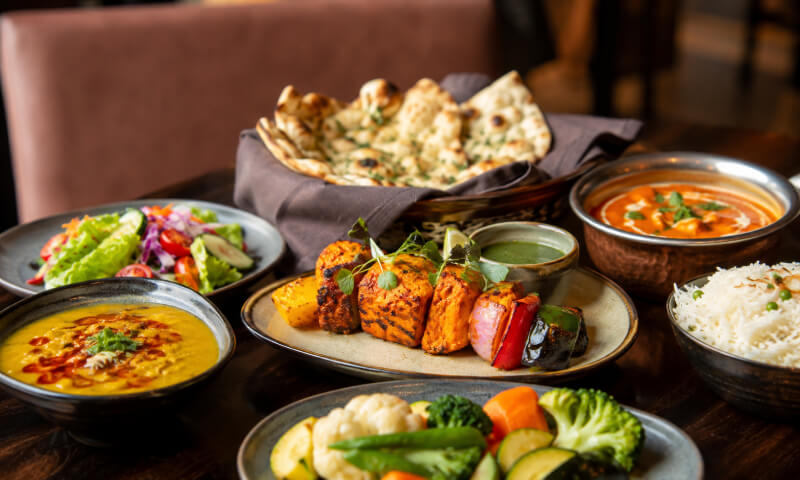
A worked example for four people, one of whom doesn’t do chilli: Butter Chicken, Lamb Rogan Josh, Yellow Dal Tadka, Vegetable Jalfrezi, two rices, two breads, one raita. The nervous eater lives happily on butter chicken and dal, and can try the rogan josh with plenty of rice if they feel like it. Nobody had to eat medium.
The dal is worth noting there. Yellow Dal Tadka is mild, cheap, and the dish that quietly gets finished at every table. More on how to build a table order in our first-timer’s guide.
A word to the person who got dragged along
If you’re reading this in the car park, order the Vegetable Korma with plain butter naan and jeera rice, and get a mango lassi. You will be completely fine, and you’ll probably like it more than you expect.
And if you want to try one bite of something braver, take a spoonful of whatever your friend ordered onto a big pile of rice. That’s how everybody at this table learned, including the ones now ordering vindaloo.
A Toowoomba note
We hear “I’m the one who can’t handle spice” a few times most nights, usually said apologetically by someone at a table of six. It’s a very common thing to be.
During the Carnival of Flowers in September, when groups come in from out of town, mild ordering climbs noticeably. Big tables default to the safe end. That’s fine, though a table of eight is the one time you can afford to order a hot dish that nobody has to finish.
Frequently asked questions
What Indian food is not spicy?
Korma, butter chicken, mango chicken, paneer butter masala, malai kofta, shahi paneer, dal makhani, aloo gobi and plain naan are all mild or can be cooked with no chilli. Rice, raita and gulab jamun contain no chilli at all. There’s far more non-spicy Indian food than most people assume.
What’s the mildest curry at an Indian restaurant?
Korma. It’s built on cashew or almond paste and cream, with no tomato and effectively no chilli, so it has neither heat nor acidity. Mango chicken is equally gentle and sweeter. Butter chicken is a close third. Our mild curry guide compares them properly.
Is mild Indian food bland?
It shouldn’t be. Mild refers to chilli only. A good mild curry still carries cumin, coriander, cardamom, cinnamon and garam masala, so it’s full of flavour without any burn. If a mild curry tastes of nothing, that’s a kitchen taking a shortcut, not a fault of ordering mild.
Can I ask for no chilli at all?
Yes, and it’s a better request than “mild” if you’re sensitive, because mild still contains some. We can cook nearly every dish on our menu with no chilli. Vindaloo, madras and Laal Maas are the ones where we’d suggest choosing something else instead.
What should I drink if my curry is too hot?
A mango lassi, plain yoghurt, or milk. The casein protein in dairy binds to capsaicin and removes it. Water and beer both make it worse, because capsaicin isn’t water soluble and carbonation sharpens the burn. Plain rice works well too.
Is butter chicken spicy?
No. It’s one of the mildest curries on any Indian menu. The red colour comes from tomato and Kashmiri chilli, which is used for colour rather than heat. We’ve written about it in detail in is butter chicken spicy.
Is naan spicy?
No. Plain butter naan, garlic naan, cheese naan and paneer naan are all mild. They’re bread cooked in a tandoor. All of ours contain wheat, so they’re not suitable if you’re avoiding gluten. There’s more in our guide to naan.
What’s a mild Indian dish for someone who doesn’t like creamy food?
Yellow Dal Tadka or Aloo Gobi. Dal is lentils cooked soft with a spiced oil poured over, clean and light rather than rich. Aloo gobi is potato and cauliflower cooked dry with turmeric and cumin. Both are mild and neither has cream in it.
Will the staff judge me for ordering mild?
No. It’s one of the most common requests we get and it takes no extra effort. Tell us at the point of ordering rather than after the food arrives, and if you want no chilli at all, say so plainly. We’d much rather adjust than have you push a plate away.
If you’re nervous, the Vegetable Korma with plain butter naan is the order, and we’ve never had anyone regret it. Everything’s on the full menu with mild, medium and hot marked, and if you’d rather try two gentle dishes at once, the lunch thali does exactly that.