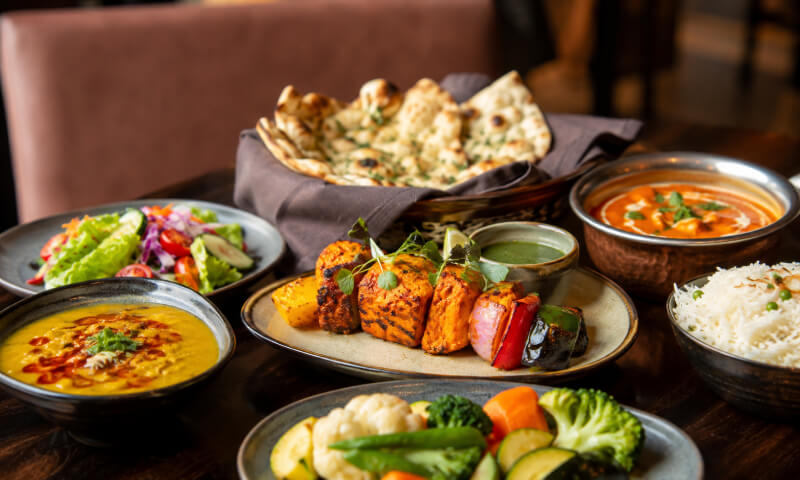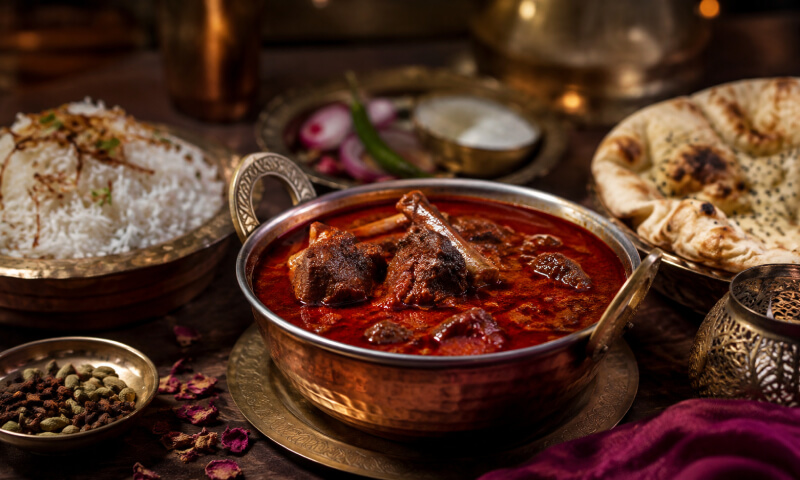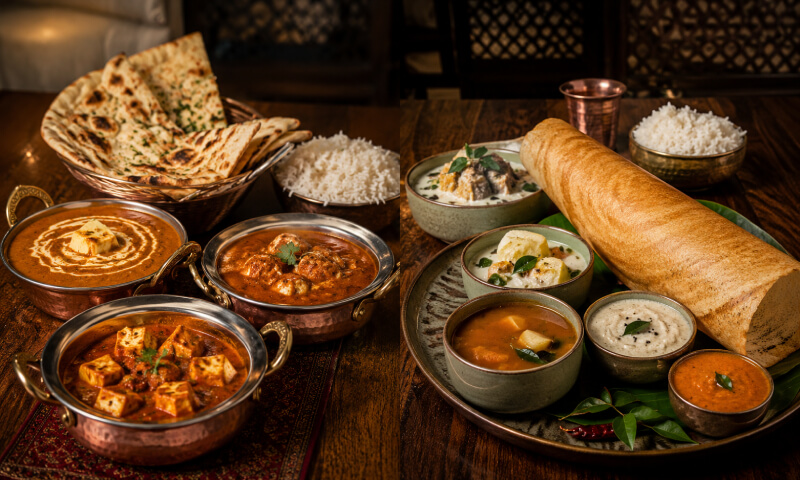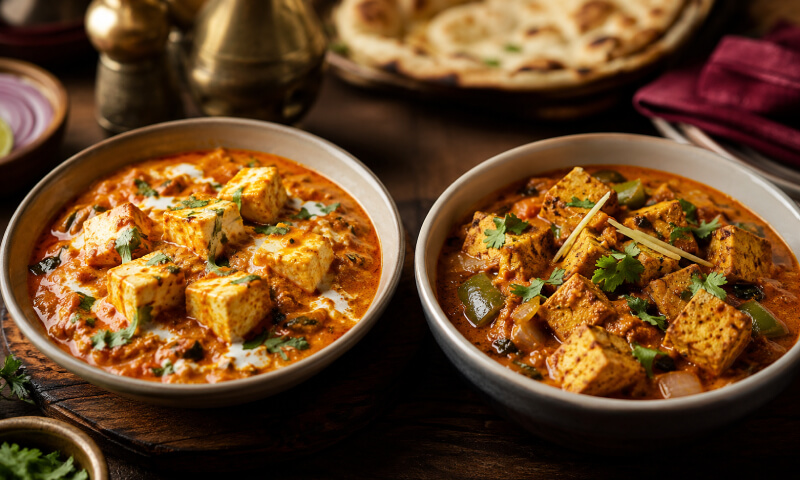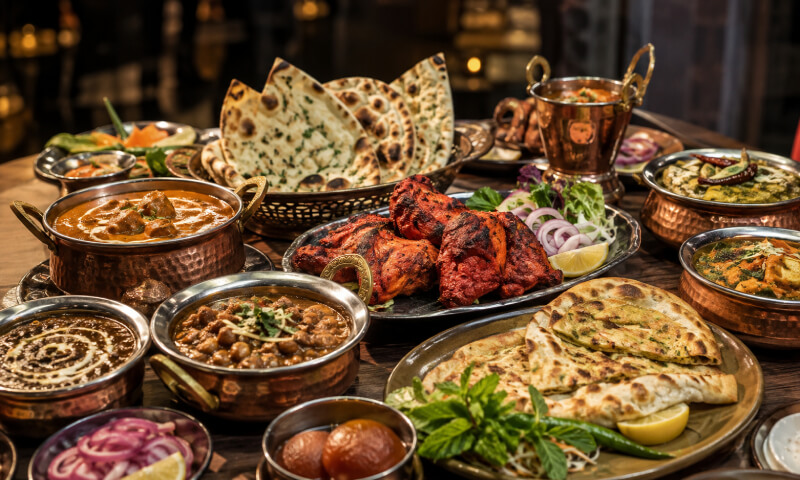
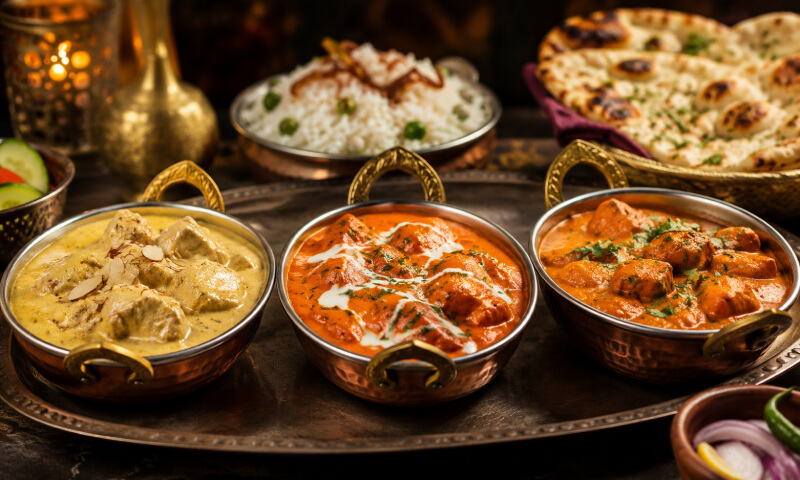
The mild curries on an Indian menu are mild because of what’s in the gravy, not because the spice has been left out. Korma uses cashew and cream, butter chicken uses cooked-down tomato and cream, tikka masala uses yoghurt and cream over an onion base. All three are full of spice and low on chilli. Korma is the mildest of the three.
Mild does not mean bland
We need to settle this before anything else, because it’s the single biggest misunderstanding about Indian food in Australia.
Mild refers to chilli. That’s all. A mild curry can carry cumin, coriander seed, cardamom, cinnamon, black pepper, turmeric and garam masala, and a good one does. The heat is the only thing that’s been dialled down.
Bland is different. Bland is what happens when a kitchen makes one base gravy in the morning, ladles it into a pan, adds a spoon of curry powder and calls it whatever the customer ordered. That’s a cooking failure, not a spice level. Jasvinder is from Rajasthan, where the food is properly hot, and he cooks the mild dishes with the same spice work as the hot ones.
Korma
What makes it mild: cashew or almond paste and cream, with no tomato at all.
Korma is the gentlest thing we cook. The gravy is nut paste, cream, and whole spices like cardamom and cinnamon that give warmth without any bite. It’s pale, thick and slightly sweet in a nutty way rather than a fruity one.
Because there’s no tomato, there’s no acidity, and that matters more than people expect. Some diners who say they can’t handle spicy food are actually reacting to sharpness. If butter chicken has ever felt a bit sharp to you, korma is your dish.
We do Vegetable Korma and Beef Korma. The vegetable version is the better one in our view, because the nut gravy sits well against soft vegetables and doesn’t have to compete with meat. It’s what we recommend most often to people who tell us they don’t like curry.
The word korma comes from a braising technique used in Mughal kitchens, and historically it wasn’t necessarily mild at all. What’s served in Australia is the gentle end of a much wider family.
Butter chicken
What makes it mild: tomatoes cooked down until sweet, plus butter and cream.
Butter chicken is the most ordered Indian dish in the country. Tandoor-cooked chicken goes into a smooth makhani gravy of tomato, butter and cream, finished with crushed dried fenugreek leaves.
It’s mild but not as mild as korma, because the tomato brings a tang korma doesn’t have. It’s also the richest of the three, and a full serve on its own is heavier going than people expect. The spice is all aroma, with a little Kashmiri chilli used for red colour rather than heat. We’ve written both what butter chicken is and whether it’s actually spicy in more detail.
Chicken tikka masala
What makes it mild: yoghurt from the marinade plus cream in the sauce, softening an otherwise assertive onion and spice base.
Tikka masala is the least mild of the three, and it’s also the most interesting. Chicken is marinated in yoghurt and cooked in the tandoor, then finished in a gravy built on onions cooked down slowly, ginger, garlic, tomato, capsicum and ground spice, with cream added to round it off.
You can taste the spices individually in a good tikka masala in a way you can’t in butter chicken, because there’s less sugar and cream smoothing everything into one flavour. There’s real warmth to it too. Not heat exactly, but you know you’re eating a curry.
If mild curries have started to bore you, this is where to go next. We’ve made the full case for it over butter chicken in butter chicken vs tikka masala.
Paneer Butter Masala, for vegetarians
What makes it mild: the same tomato, butter and cream gravy as butter chicken.
This is the answer to “what’s the vegetarian butter chicken”, and it’s a genuine dish in its own right rather than a substitution. Cubes of paneer, the fresh Indian cheese that holds its shape when cooked, in a makhani-style gravy.
Paneer has almost no flavour of its own. That sounds like a criticism and isn’t. It takes on the gravy completely while giving you something with texture to chew, which is what a rich sauce needs.
Two other mild vegetarian options worth knowing. Malai Kofta is vegetable and paneer dumplings in a creamy gravy, the richest thing in our vegetarian section. Shahi Paneer sits in similar territory.
Note for vegans: none of these work. Paneer is dairy, malai means cream, and dal makhani contains butter and cream too. If you’re vegan and want mild, go to Channa Masala, Aloo Gobi or Aloo Baingan, which are vegan as we cook them and can be made as mild as you like. Yellow Dal Tadka is vegan if we make it with oil rather than ghee, just ask. There’s more on our vegan and vegetarian Indian food page.
Mango Chicken, the sweet one
What makes it mild: mango pulp and cream, and very little chilli.
Let’s be straight about this one. Mango Chicken isn’t a traditional Indian dish. It’s a modern restaurant creation and purists don’t rate it.
We keep it because it does a job nothing else does. It’s the dish that gets children eating Indian food, and a kid who eats mango chicken at seven will order a vindaloo at twenty-five. Is it the best thing we cook? No. Does it earn its place? Yes.
The five side by side
| Dish | Base | Sweetness | Heat | Best for |
|---|---|---|---|---|
| Vegetable or Beef Korma | Cashew, cream | Nutty, mild sweetness | Lowest | Anyone who says they don’t like curry |
| Butter Chicken | Tomato, butter, cream | Noticeably sweet | Very low | First-timers, kids, familiarity |
| Chicken Tikka Masala | Onion, tomato, yoghurt, cream | Low | Gentle warmth | People ready for more flavour |
| Paneer Butter Masala | Tomato, butter, cream | Noticeably sweet | Very low | Vegetarians who want richness |
| Mango Chicken | Mango, cream | Sweetest | Lowest | Children, sweet tooths |
How to order mild for a table without it getting boring
The mistake we see most often is a table ordering three creamy curries. Butter chicken, korma and paneer butter masala arrive together, they all sit in the same register, and by halfway through nobody can taste the difference between them.
Order one creamy dish and one that isn’t. Vegetable Jalfrezi is tomato and capsicum based with no cream, and stays mild while giving the table contrast. Yellow Dal Tadka is simple and clean and resets your palate between bites of something rich. Add jeera rice rather than plain, and get one bread that isn’t butter naan.
If some of your table wants heat and some doesn’t, don’t compromise into the middle. Order a genuinely mild dish and a genuinely hot one and let people serve themselves. That works far better than everything arriving at medium.
A Toowoomba note
Mild curry season here is all year, but the reason changes. In July, when it’s cold on the range, people want korma and butter chicken because they’re warming and heavy. In September during the Carnival of Flowers, when the CBD fills with visitors, it’s because groups are eating out together and mild is the safe common ground.
We’d gently push back on that second one. A table of eight is the best possible time to order a couple of hot dishes as well and let people try something they wouldn’t order alone.
Frequently asked questions
What is the mildest Indian curry?
Korma. It’s made with cashew or almond paste and cream and contains no tomato, so it has no acidity and almost no chilli. Vegetable Korma and Beef Korma are both on our menu. Butter chicken and mango chicken are close behind, and any of our curries can be cooked without chilli if you ask.
Is korma milder than butter chicken?
Yes, slightly. Both are mild, but korma has no tomato, so it lacks the tang that gives butter chicken a small amount of sharpness. Korma is nutty and creamy, butter chicken is sweet and tomato-led. If you’ve found butter chicken a bit sharp before, korma will suit you better.
Is tikka masala a mild curry?
It’s mild by Indian standards but it’s the warmest of the three common mild curries. There’s more garam masala and more chilli in it than in butter chicken, and it has a noticeable tang. Most people find it comfortable. If you want it milder or hotter, we cook to order.
What mild Indian dish is best for kids?
Mango Chicken first, butter chicken second. Both are sweet, creamy and gentle. Plain butter naan is a reliable side because it’s essentially warm bread, and Gulab Jamun for dessert has converted more children to Indian food than any curry has.
What’s a mild vegetarian Indian curry?
Paneer Butter Masala, Vegetable Korma, Malai Kofta or Shahi Paneer if you want creamy. Aloo Gobi, Channa Masala or Yellow Dal Tadka if you want something lighter. Our vegetarian section has thirteen dishes, so vegetarians are not choosing from a token corner of the menu here.
Can any curry be made mild?
Most can, but not all should be. Vindaloo and Madras are built around heat and sourness, and making them mild removes the point of the dish. Laal Maas, the Rajasthani lamb, is defined by red chilli. We’ll cook them milder if you insist, but we’d steer you to a different dish instead.
Does mild food have less flavour?
No. Chilli is one ingredient. Removing it doesn’t touch the cumin, coriander, cardamom, cinnamon or fenugreek doing most of the work. A properly made mild curry is just as complex as a hot one. If it tastes weak, that’s a base gravy problem, not a mild problem.
Which mild curry travels best as takeaway?
The creamy ones hold up well, because the fat keeps them stable and they reheat without splitting. Butter chicken, korma and paneer butter masala all arrive in good shape. Dry dishes and breads are the ones that suffer on a drive, so if you’re getting takeaway, eat the naan first.
If you’re not sure where to start, order a Vegetable Korma and a Chicken Tikka Masala for the table and see which end of the mild range you actually like. Both are on the full menu, and the waiter will happily tell you where anything else sits on the scale.