Goan food is the cooking of India’s smallest state, shaped by 450 years of Portuguese rule. It uses vinegar, pork and chilli in ways the rest of India doesn’t, alongside coconut, tamarind and kokum from the Konkan coast. Vindaloo comes from the Portuguese carne de vinha d’alhos, meaning meat in wine and garlic. The “aloo” has nothing to do with potato.
Goa is a different country in a small way
The Portuguese arrived in Goa in 1510 and stayed until 1961. That’s longer than any other European presence in India by a wide margin, and it left marks you can still taste.
Most obviously, a large Goan Catholic population that eats pork and beef, which sets Goan cooking apart from almost everywhere else on the subcontinent. Alongside that, a Hindu Saraswat tradition that doesn’t, and cooks coconut, kokum and vegetables in a style closer to the rest of the Konkan coast. Both are Goan. They’re just not the same food.
The other thing Portuguese trade brought was ingredients, and this is the part people find hardest to believe.
Indian food had no chilli before the Portuguese
Chillies are from the Americas. They reached India through Portuguese trade routes in the sixteenth century, most likely landing on the west coast around Goa first, and spread from there.
Before that, Indian cooking got its heat from black pepper and long pepper. Every fiery curry you have ever eaten depends on an ingredient that has been in India for roughly 500 years, which is a long time by any normal measure and no time at all by Indian standards.
Potatoes, tomatoes, cashews and pineapple came in on the same trade. So the tomato base under half the northern curries in this country is also a relative newcomer. It’s worth sitting with that for a second before anyone tells you what authentic Indian food is.
Goa got there first with all of it, which is part of why Goan cooking uses chilli with such confidence.
Vinegar is the Goan signature
The ingredient that really separates Goan cooking from its neighbours is vinegar, usually made from coconut palm toddy.
Portuguese sailors preserved meat in wine and garlic. In Goa, with no wine and plenty of palm toddy, vinegar took its place. It preserves in a hot climate, it tenderises, and it gives Goan meat dishes a sharpness that no other regional Indian cuisine has as a default setting.
Once you know to look for it, you can pick a Goan dish blind. Sorpotel, a pork and offal stew, is vinegar-forward. Balchão is a prawn or fish dish preserved in a chilli and vinegar paste. Xacuti uses roasted coconut and a heavy whole-spice masala. Bebinca is a layered coconut and egg dessert that has more in common with a Portuguese sweet than an Indian one.
What vindaloo actually means
Carne de vinha d’alhos. Meat, in wine, with garlic. That’s the Portuguese dish that came off the ships, and the name got worn down in Konkani mouths into something that sounds like vindaloo.
Vinha is wine. Alhos is garlic. Not aloo, the Hindi word for potato. The resemblance is a coincidence, and it’s such a convincing one that a good number of Indian restaurants around the world now put potato in their vindaloo because customers expect it. A folk etymology that changed the recipe. There aren’t many better examples in food.
The Goan dish is pork, marinated hard in palm vinegar, garlic, dried red chilli, cumin, cinnamon, clove and black pepper, then cooked slowly. Often a little jaggery or sugar goes in to round the acid. It’s sour first and hot second. The vinegar is the loudest thing in the bowl.
That’s the dish. Not a chilli endurance test. A sharp, garlicky, well-spiced pork stew that happens to have decent heat in it.
How vindaloo became a dare
The distortion happened in British curry houses, and Australia inherited it wholesale.
Restaurant menus from the sixties onwards arranged curries into a heat ladder so customers could order by tolerance rather than by dish. Korma at the mild end, then madras, then vindaloo, then phall for people with something to prove. Vindaloo was slotted in as a rank on that ladder rather than as a Goan dish, and the ladder needed a hot rung.
So the chilli got scaled up and the vinegar got quietly dropped, because acid confuses people who are ordering purely for heat. What was left was a hot curry with a Goan name and none of the Goan character.
We’ll say the obvious thing. That version is worse. Vinegar is what makes vindaloo interesting, and taking it out to make room for more chilli is like taking the lemon out of a lemon tart and adding sugar. Plenty of people order it that way and enjoy it, and that’s fine. But it’s a different dish and it’s a lesser one.
If heat is what you’re actually after, our post on Indian curry heat levels is more useful than a menu ladder.
What we serve, and what we don’t
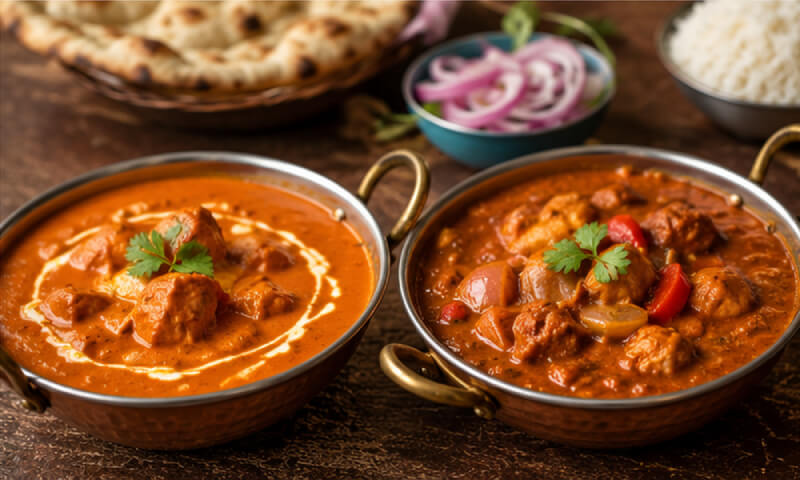
Straight answer. Our Chicken Vindaloo and Lamb Vindaloo are not Goan pork vindaloo, because we don’t serve pork.
What we keep is the character: vinegar in the marinade, a lot of garlic, dried red chilli, and whole spices rather than a generic curry base. It’s tangy, it’s hot, and it’s meant to taste sharp. If you order it and it tastes like a hotter version of a tomato curry, someone has made it wrong.
Chicken vindaloo is the safer order. Lamb is the better one. Lamb has the fat and the connective tissue that a long vinegar braise was designed for, and it holds up to the acid where chicken breast can go tight. If you’re getting one, get the lamb.
Ask for it medium the first time. Not because we think you can’t handle hot, but because at medium you can actually taste the vinegar and the garlic, which is the point of ordering vindaloo rather than any other hot curry.
Goan fish curry, the dish we’d argue for
Goan Fish Curry is on our menu and it’s the most underordered thing we cook.
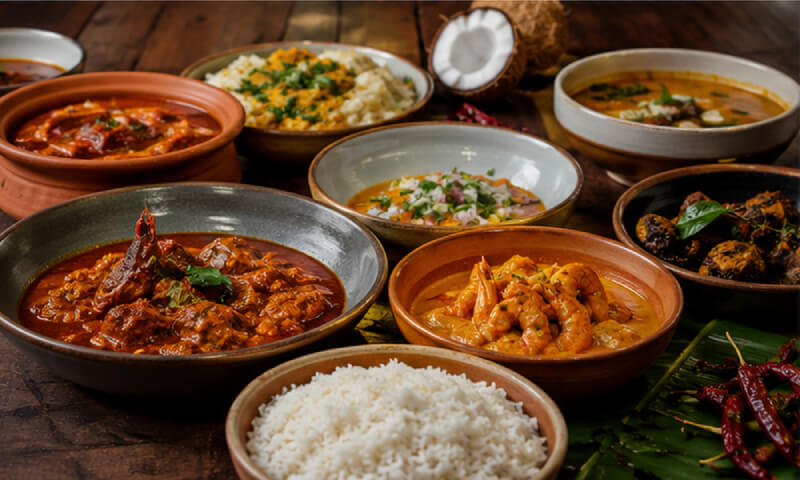
It’s coconut milk, ground red chilli, tamarind for sourness, garlic and ginger, and a thin gravy that pools rather than clings. In Goa, kokum is often used instead of or alongside tamarind, a dark sour fruit from the Konkan coast that gives a cleaner, fruitier acidity. [CONFIRM: whether we use kokum, tamarind or both in our Goan fish curry.] [CONFIRM: which fish we use.]
It eats nothing like a northern curry, and it’s the clearest example on our menu of the split we describe in our post on North Indian versus South Indian food. There’s no cream, no cashew paste and no heavy onion-tomato base. It’s light, sour, hot and fragrant, and it wants plain steamed rice or coconut rice underneath it. Naan is the wrong bread for it, though people order it anyway.
Toowoomba is two hours inland and up a range, and inland towns order less seafood than coastal ones. That’s just how it goes. It does mean a genuinely good coastal Indian curry sits on our menu getting passed over for butter chicken most nights, which is a shame. If you like Thai or Sri Lankan fish curries, this is the Indian one you’ve been missing.
Frequently asked questions
What is Goan food?
The cooking of Goa on India’s west coast, shaped by 450 years of Portuguese rule. It’s marked by vinegar, heavy use of garlic and chilli, coconut, tamarind and kokum, and by pork and beef dishes that are rare elsewhere in India. Vindaloo, sorpotel, xacuti and Goan fish curry are the best known dishes.
Does vindaloo have potato in it?
Not traditionally. The name comes from the Portuguese carne de vinha d’alhos, meat in wine and garlic, and the “aloo” sound is a coincidence rather than the Hindi word for potato. Some restaurants add potato because customers expect it. Ours doesn’t.
Is vindaloo the hottest curry?
On a British-style menu ladder it usually sits near the top, with only phall above it. In Goa it isn’t ranked that way at all. A proper vindaloo is defined by vinegar and garlic, with heat as one component rather than the goal. We cook ours hot, but the sourness is what you should notice first.
Is vindaloo Indian or Portuguese?
Both, genuinely. The dish came from a Portuguese method of preserving meat in wine and garlic, and Goan cooks rebuilt it with palm vinegar, dried chilli and Indian whole spices until it became something the Portuguese wouldn’t recognise. That’s what happens to food over 450 years.
What meat is in a real vindaloo?
Pork, in Goa. Goan Catholic cooking uses pork widely, which is unusual in India. We don’t serve pork, so our vindaloo comes as chicken or lamb, cooked with the same vinegar and garlic marinade. The lamb is the closer match in texture and it’s the one we’d point you to.
Is Goan food very spicy?
It’s hot, but the sourness is more distinctive than the heat. Vinegar in the meat dishes and tamarind or kokum in the fish curries give Goan food a sharpness you don’t get in northern Indian cooking. If you find heavy creamy curries cloying, Goan food is likely to suit you.
What is kokum?
A dark purple fruit from the Konkan coast, dried and used as a souring agent in coastal Indian cooking. It gives a cleaner, more fruity sourness than tamarind and a slightly darker colour. It’s common in Goan and Mangalorean fish curries, and it’s one of the ingredients that makes coastal food taste coastal.
What should I order with Goan fish curry?
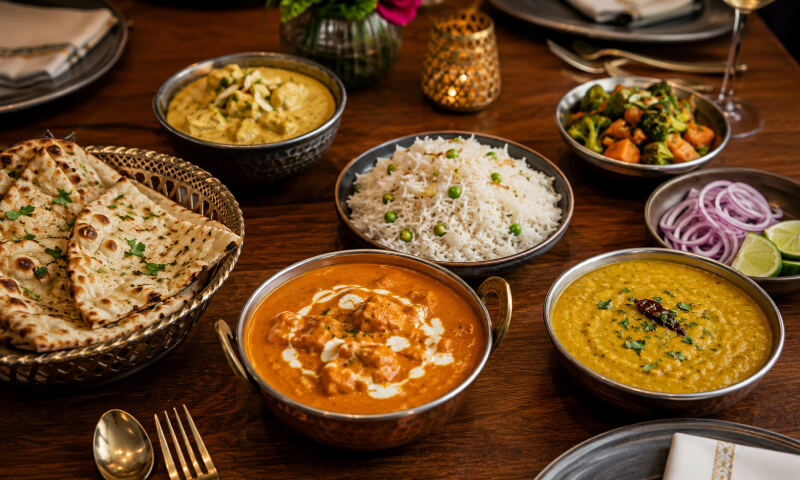
Plain steamed rice or coconut rice. The gravy is thin and sour, so it wants a neutral base to soak into rather than a rich bread. Naan works against it. If you’re sharing, it sits well next to a milder dish like Vegetable Korma, and badly next to another sour or hot curry.
Is your vindaloo gluten free?
The curry itself is, and we mark gluten free dishes on the menu. The thing to watch is the bread, since every naan and roti we make contains wheat. Order vindaloo with rice and you’re fine. Our gluten free page explains how we handle it in the kitchen.
Two things worth doing next time you’re in. Order the Lamb Vindaloo at medium so the vinegar and garlic actually come through, and give the Goan Fish Curry a run with coconut rice. We’re on Margaret Street, open lunch and dinner seven days, and the fish curry deserves more attention than it gets.