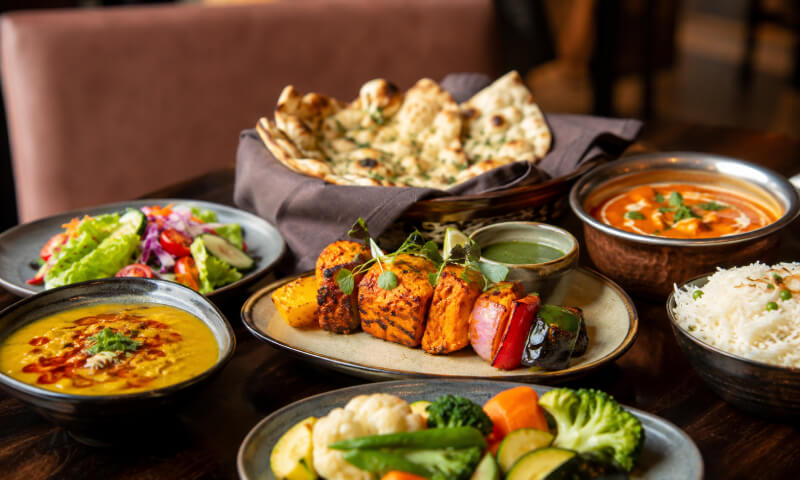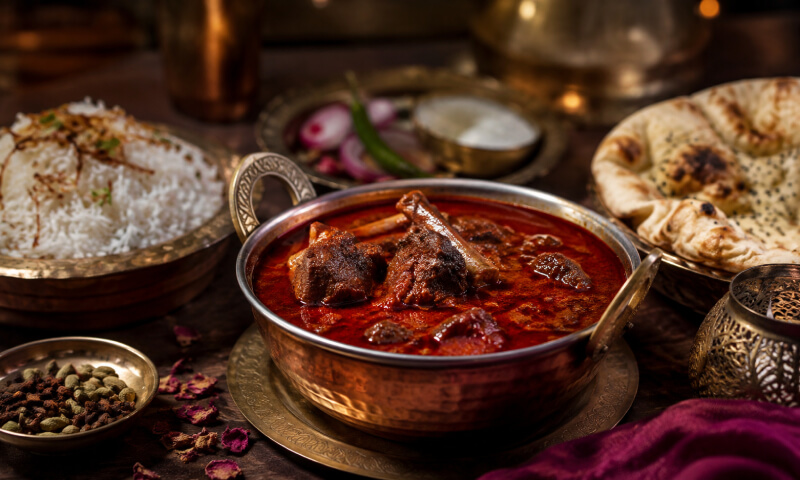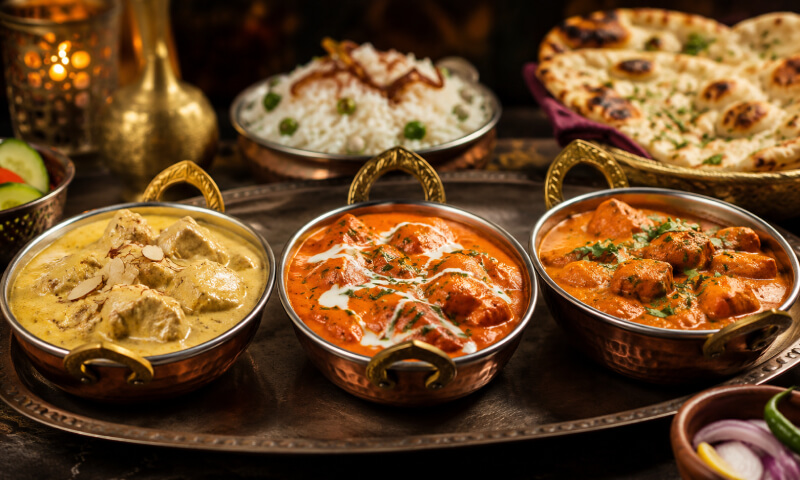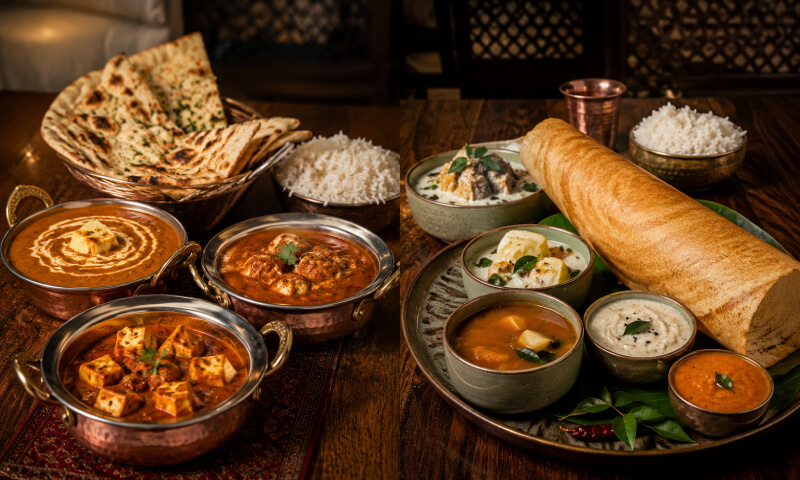
Order fewer curries than people and share everything. For two, get two curries, one rice and one bread. For four, get three curries plus a dal, two rices and three breads. Pick curries from different families rather than different meats, and always include one dal. Ordering one curry each is the most common mistake.
An Indian meal is not a plate each
This is the single thing that separates a good first Indian meal from a disappointing one.
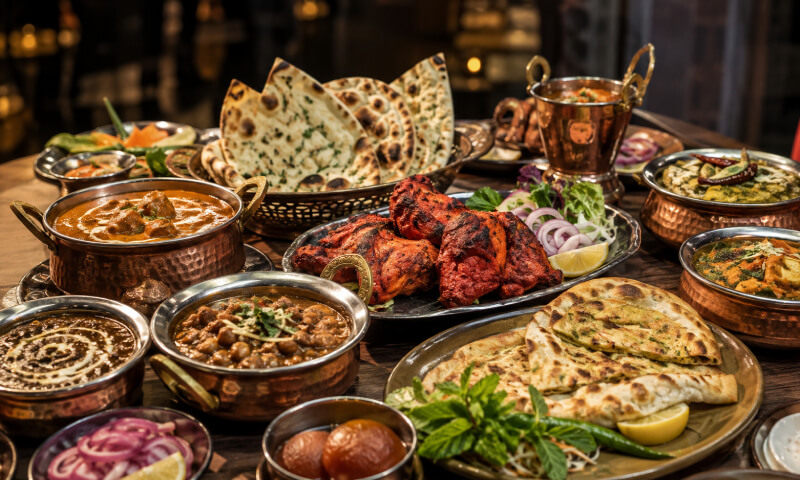
In an Australian pub you order a steak, it arrives, it’s yours. Indian food has never worked like that. A meal at home in India is several dishes in the middle of the table with rice and bread, and everyone builds their own plate from a bit of each. That’s the format the restaurant menu was designed around.
When four people each order their own curry, four large bowls of sauce arrive and everybody eats one thing. You’ve paid more, eaten less variety, and probably left half a bowl behind, because a full serve of a rich curry on its own is heavier than anyone expects.
Order fewer dishes than there are people, and share them. That’s the whole trick.
The ordering formula
For two people. Two curries, one rice, one bread, one creamy and one not. Example: Butter Chicken and Vegetable Jalfrezi, jeera rice, garlic naan. Two genuinely different flavours, no leftovers.
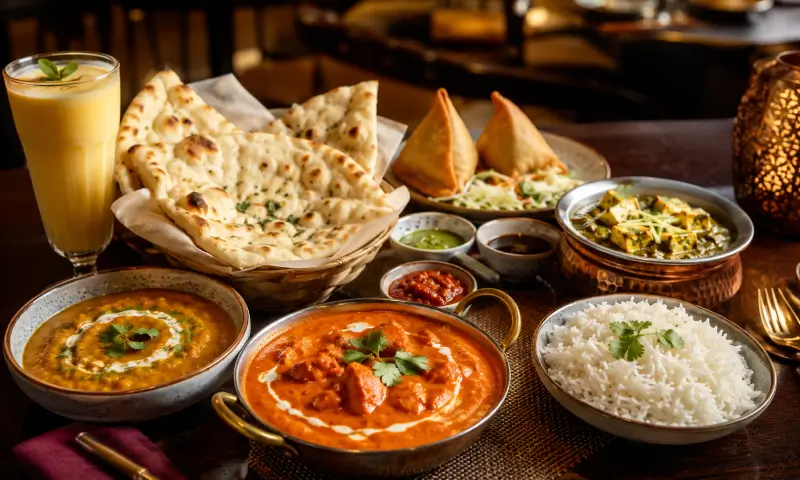
For four people. Three curries plus a dal, two rices, three breads. Four mains for four people sounds light and isn’t, because rice and bread do more work than you think. Example: Chicken Tikka Masala, Lamb Rogan Josh, Aloo Gobi, Yellow Dal Tadka, one jeera and one steamed rice, two garlic naan and a butter roti. A Mix Platter to start if you want something while you decide.
For eight people. Five or six curries, three or four rices, five breads, two entrees. Not eight curries. Example: Butter Chicken, Chicken Tikka Masala, Lamb Rogan Josh, Goat Madras, Malai Kofta and Dal Makhani, plus rices and breads, with a Lamb Seekh Kebab and an Onion Bhaji first.
The rough ratio to remember: about 0.75 curries per person, one rice per two or three people, and roughly one bread per person. Round down on curries and up on bread.
Choose across families, not across meats
Second most common mistake, and it’s subtler.
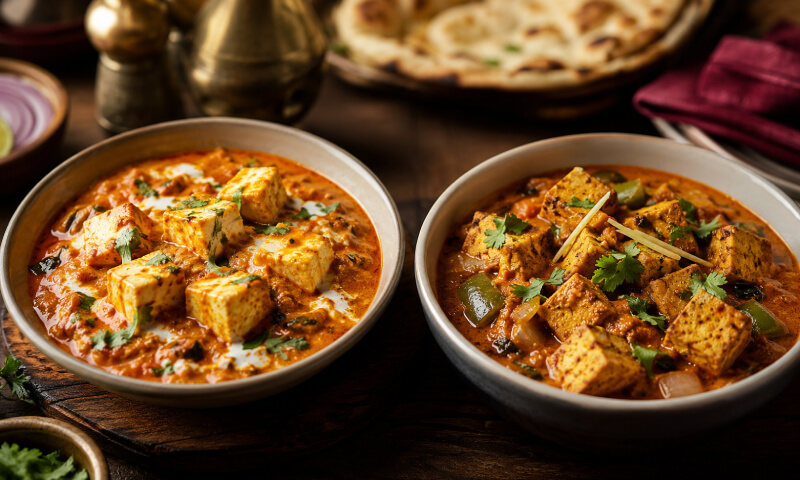
A table orders Butter Chicken, Beef Korma and Paneer Butter Masala, feeling like they’ve covered chicken, beef and vegetarian. They’ve ordered one dish three times. All three are cream and nut gravies, all three are mild and sweet, and by halfway through nobody can tell them apart.
The protein is the least important variable. The gravy is the dish. Indian curries sort into roughly six families based on what the gravy is built from, and we’ve set them out in types of Indian curry. Before you order, count how many dishes on your list have cream in them. More than one in three, swap something.
Good contrasts to build in:
- One creamy, one tomato based
- One wet, one dry (a Karahi or an Aloo Gobi against a curry)
- One mild, one hot, rather than everything at medium
- One vegetable dish even if nobody at the table is vegetarian
That last one gets ignored constantly and it’s a mistake. Our vegetarian section runs to thirteen dishes and some of the best cooking on the menu is in it.
The dal nobody orders and everybody finishes
Here’s a thing that happens most nights. A table orders four curries plus a Yellow Dal Tadka, because someone said we should probably get a dal. It arrives looking like the least exciting bowl on the table. It’s the first one scraped clean.
Dal is lentils cooked soft, then finished with a tadka, which is whole spices bloomed in hot fat and poured over at the last second so they hiss. It does a specific job on a restaurant table: it resets your palate between mouthfuls of rich food. Eat three spoonfuls of butter chicken in a row and by the third you’ve stopped tasting it. Put dal in between and it tastes new again.
Two on our menu. Yellow Dal Tadka is the light one, clean and lemony, and vegan if we make it with oil rather than ghee (just ask). Dal Makhani is the rich one, black lentils and kidney beans cooked long with butter and cream. Order either. They’re among the cheapest things on the menu and they improve everything around them.
Rice and bread: get both
New diners tend to pick one. Get both, because they do different jobs.
Rice is the volume and the safety valve. It stretches every curry and lets anyone soften a dish that’s hotter than they want. Under-ordering rice is how tables end up with sauce and nothing to put it on. Ours run 3to5. Jeera (basmati with cumin) beats plain steamed, because cumin adds something without competing. Coconut goes well with the madras dishes.
Bread is for scooping the thicker and drier dishes. Karahi, aloo gobi and saagwala all eat better with bread than rice. Breads run 5to8.50, all cooked in the tandoor. Don’t order three of the same. Make one plain butter naan (neutral, goes with everything), one garlic and one something else. Cheese naan and aloo stuffed naan are close to a meal in themselves, so treat them as a dish. Full detail in our guide to naan and the wider Indian breads post.
Everything in our bread section contains wheat. If you’re avoiding gluten, go rice and use the (GF) markers, or see our gluten free page.
Entrees: order fewer than you think
Indian entrees are heavier than European ones and they arrive fast. For two people, one or none. For four, one Mix Platter shared. For eight, two or three items.
Best picks: Lamb Seekh Kebab or Chicken Tikka from the Royal Entrees, both cooked in the tandoor, so smoky and dry rather than fried. Onion Bhaji and Veg Samosa are the crowd pleasers. Chilli Paneer Dry is genuinely hot, so read the room first.
A biryani is a whole meal, not a side
Worth flagging because it catches people out. Biryani is rice and meat cooked together with spice, and it’s a complete dish. It’s not the rice for the table.
Order it as somebody’s main, not as a shared side, and don’t order a curry as well unless you’re very hungry. Ours run 22to27 in chicken, goat, lamb and vegetable. We’ve written about what makes one properly in what is biryani, and covered the rice section generally in Indian rice dishes.
Heat: decide before you order, not after
Every curry is cooked to mild, medium or hot. That’s a chilli adjustment on top of the dish’s own character, so a mild vindaloo is still a hot dish and a hot butter chicken is still a mild one.
For a first visit, order mild or medium and pick a dish that suits. If your table has one person who can’t take chilli, don’t put everything at medium as a compromise. Order one genuinely mild dish and one genuinely hot one and let people serve themselves. There’s a full ranking in Indian curries by heat level, and a dedicated guide for people who don’t like heat.
The Toowoomba shortcut: the lunch thali
If you want to try Indian food properly without committing to a full table order, come at lunch.
Our Lunch Thali is two dishes with rice and bread on one platter, 20to25, available during lunch service only, 11:30am to 2pm. It’s the cheapest way to eat two different curries in one sitting, and it’s how we’d suggest anyone unsure about Indian food should start. Pick one creamy and one not, and you’ll learn more about what you like in half an hour than in three dinners of butter chicken.
We’ve written about the format properly in what is a thali.
The order of things
Entrees arrive first and fast. Mains come out together rather than one at a time, deliberately, because they’re meant to sit on the table at once.
Serve yourself a small pile of rice and add a spoon of one curry at a time to the edge of it, rather than flooding the plate. Eat with a fork, or with bread. Nobody is watching.
Gulab Jamun for dessert is $5 and it’s the only one we do, because it’s the only one worth doing. Warm milk dumplings in sugar syrup, and also the fix if anyone found a dish too hot.
A Toowoomba note
We’re on Margaret Street in the CBD and the tables split fairly neatly. Lunch is workers with an hour, which is what the thali exists for. Dinner from 4:30 is families early and groups later.
The most common first-timer order we see is one butter chicken per person plus one garlic naan for the table. That’s exactly backwards. Fewer curries, more bread, more rice, and get the dal.
Frequently asked questions
How many dishes should you order at an Indian restaurant?
Fewer than the number of people. Around three curries plus a dal for four people, or five to six curries for eight. Add one rice per two or three diners and roughly one bread each. Indian food is designed to be shared, so ordering one curry per person means less variety for more money.
What should a beginner order at an Indian restaurant?
Butter Chicken or Chicken Tikka Masala as the familiar dish, plus something different alongside it, like a Lamb Rogan Josh or a Vegetable Jalfrezi. Add jeera rice, a garlic naan and a Yellow Dal Tadka. That combination covers rich, fresh and light in one meal.
What’s the most popular Indian dish in Australia?
Butter chicken, by a very wide margin. It’s mild, creamy and sweet, which is why it works as a first Indian dish. It’s a good curry and there’s a lot more on the menu, so it’s worth treating it as a starting point rather than a destination.
Do you order rice or naan with curry?
Both, ideally. Rice stretches the curries and lets people manage heat on their own plate. Bread is better for scooping thicker or drier dishes like karahi and aloo gobi. For four people, two rices and three breads is about right.
What is a thali?
A platter with several small dishes served together as one complete meal, with rice and bread. Our Lunch Thali is two dishes plus rice and bread, 20to25, at lunch only. It’s the cheapest way to try two curries in one sitting. More in what is a thali.
How much does an Indian meal cost per person?
It depends on how you order, but sharing brings the cost down noticeably compared to one main each. Our biryanis are 22to27, breads 5to8.50, rices 3to5 and the lunch thali 20to25. Current pricing for everything else is on the menu.
Should I order a vegetarian dish if I eat meat?
Yes. Indian vegetarian cooking is a full tradition rather than an afterthought, and some of the best dishes on any Indian menu are meat free. Our vegetarian section runs to thirteen dishes. Malai Kofta, Dal Makhani and Aloo Gobi all hold their own next to any meat curry.
Can I order Indian food for a group with different dietary needs?
Usually yes, and easily. Vegan, vegetarian and gluten free options are marked on our menu, and our chicken, lamb and goat come from halal-certified suppliers, though the venue itself isn’t halal certified and we serve beef and alcohol. See our halal and vegan and vegetarian pages for the detail.
What’s the biggest mistake people make ordering Indian food?
Ordering one curry per person. The second biggest is ordering three curries that are all cream based, so the whole table tastes the same. Pick across different gravy families and share, and a four-person meal becomes far more interesting for the same money.
If it’s your first time, order a Chicken Tikka Masala, a Lamb Rogan Josh, a Yellow Dal Tadka and two breads for a table of four, and see how much further that goes than four separate curries. Everything’s on the full menu, and lunch between 11:30am and 2pm is the cheap way to test the waters.