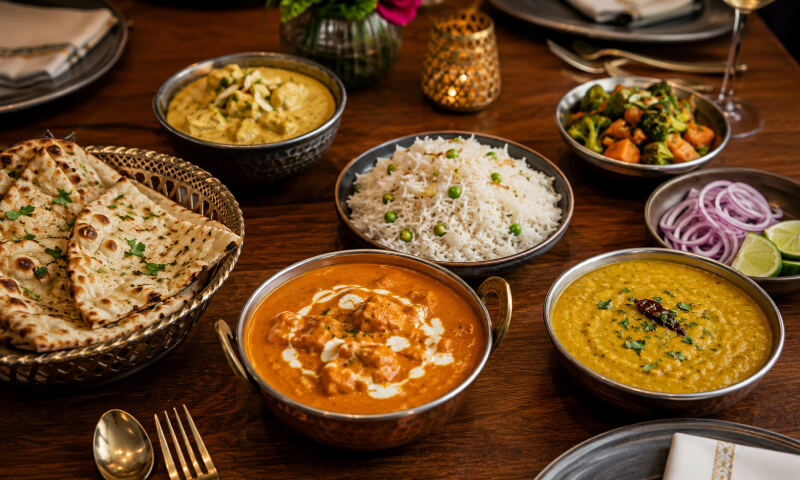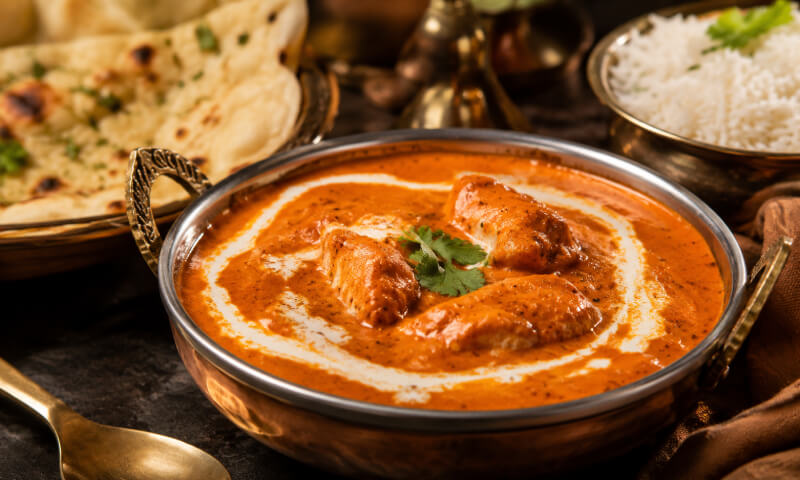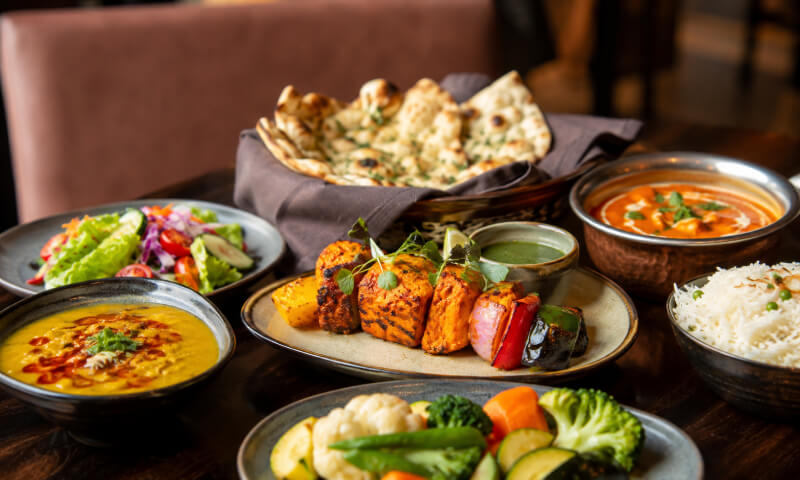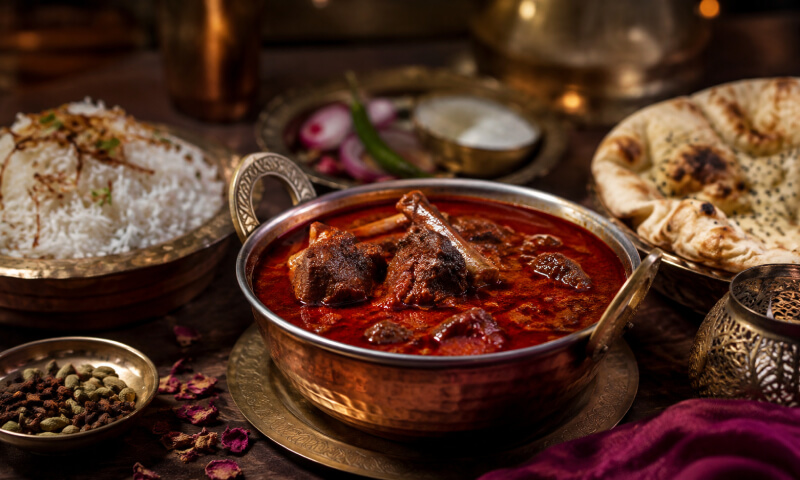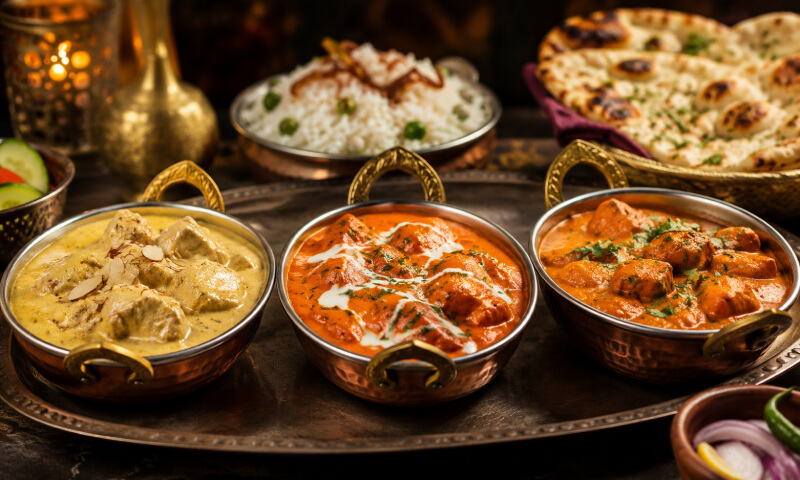
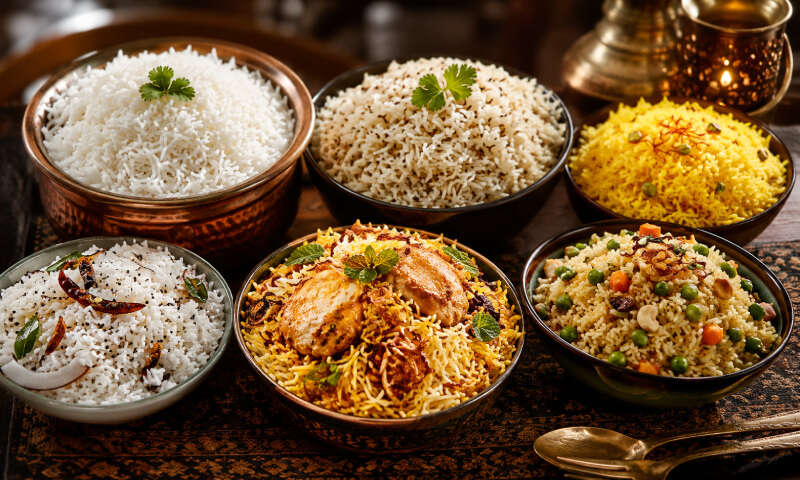
Indian rice dishes fall into two groups. Plain rices are cooked simply and served alongside curry: steamed basmati, jeera (cumin) rice, saffron rice and coconut rice, 3to5 at Ice n Spice. Composed rice dishes are meals in themselves, where rice is cooked together with meat or vegetables. Biryani and pulao are the two main examples, and they’re made in fundamentally different ways.
Basmati is doing most of the work
Nearly every rice dish on a North Indian menu starts with basmati, and it’s worth understanding why, because the substitution people make at home is usually where things go wrong.
Basmati is a long-grain aromatic rice grown in the Himalayan foothills, in northern India and Pakistan. The grain is unusually long and slender, and it elongates rather than fattening as it cooks. It carries a natural aroma from a compound also found in pandan leaf. And good basmati is aged, often for a year or more, which dries the grain and makes it absorb water evenly.
The result is rice that cooks dry and separate. Grains stay distinct instead of clumping, which matters under a wet curry, because clumpy rice turns to paste the moment sauce hits it. Jasmine, arborio and short-grain varieties do the opposite. Excellent for other cuisines, wrong for this one.
The four plain rices on our menu
Steamed rice
Plain basmati, washed and cooked with nothing added. It’s $3 and it’s the right order more often than people think.
If you’ve ordered something with a complicated sauce, a Goan Fish Curry or a Lamb Dhansak, plain rice is the correct partner. Anything flavoured is competing with a dish that already has plenty going on.
Jeera rice
Basmati with cumin seeds bloomed in ghee or oil, then stirred through. Jeera means cumin. The seeds toast in the fat, which turns the flavour from raw and slightly bitter to warm and nutty.
This is the best all-rounder on the list. Cumin sits underneath almost every North Indian curry already, so jeera rice never fights the dish, it just adds a bit of aroma. If you order one rice and don’t want to think about it, order this.
Saffron rice
Basmati infused with saffron, which gives it a pale gold colour and a delicate, slightly floral aroma. Saffron is expensive and it’s subtle, so this is a rice you notice more when it’s next to something mild.
Good with Butter Chicken, Shahi Paneer, Malai Kofta and Beef Korma. Wasted next to a vindaloo, where the chilli will roll straight over the top of it.
Coconut rice
Basmati cooked with coconut, which makes it slightly sweet and a bit richer than the others. It’s a Southern and coastal idea rather than a Northern one, and it works accordingly.
Pair it with the coastal dishes. Prawn Madras, Goan Fish Curry, Goat Madras. Coconut and chilli is a combination that runs the length of the Indian coastline and it holds up here. It’s also the one to order if you find the hot end of the menu a bit much, because the sweetness genuinely takes the edge off.
Biryani and pulao are not the same thing
These get used interchangeably on menus and they shouldn’t be.
Pulao (also spelled pilau or pilaf) is a one-pot dish. Rice is cooked in a seasoned stock along with whatever meat or vegetables are going in. Everything cooks together in the same liquid, absorbing it. The result is uniform: every grain tastes broadly the same, and the flavour is gentle.
Biryani is layered. Rice is parboiled separately, meat is cooked separately in a marinade and gravy, and the two are then stacked in a pot, sealed, and finished over low heat so the steam does the rest. Because they’re assembled rather than stirred, a good biryani has variation through it. The bottom is darker and more saturated, the top is paler and more aromatic.
That layering method is called dum, and it’s a big enough difference that we’ve given biryani its own explainer. We serve four: Chicken, Goat, Lamb and Vegetable, 22to27. They’re main-course sized, not side dishes.
Which rice with which curry
Some rules of thumb from twelve years of watching what comes back on plates.
Thin, hot sauces need plain rice and lots of it. Vindaloo, Madras, Laal Maas. The rice is there to carry heat, so keep it simple.
Rich, creamy dishes suit saffron rice. Butter Chicken, Korma, Shahi Paneer, Malai Kofta. A bit of aroma lifts a heavy sauce.
Dry and semi-dry dishes suit jeera rice. Karahi Chicken, Karahi Paneer, Vegetable Jalfrezi, Aloo Gobi. There’s less sauce to soak up so the rice needs a bit of flavour of its own.
Seafood and coastal curries suit coconut rice. Prawn Madras, Butter Prawns, Goan Fish Curry, Fish Butter Masala.
And a note on quantity. One rice between two people is enough if you’re also getting bread, and our guide to Indian bread types explains what’s what on that side of the menu. If you’re not eating bread, order one each. Rice is 3to5, and running out of it halfway through a curry is a miserable way to finish a meal.
The gluten free and vegan point
All of our plain rice is gluten free and vegan. No wheat, no dairy, no exceptions. That makes it the obvious swap for bread, because every bread on our menu contains wheat and the naan range contains dairy on top of that.
This is a bigger deal than it sounds. A coeliac diner usually has to give up the bread, which feels like giving up half the meal. It isn’t. Plenty of North Indian curries were eaten with rice long before restaurant naan became the default in Australia, and a properly cooked basmati with a good gravy is no compromise.
We’ve been voted number one for gluten free in Toowoomba by local diners, and the (GF) markers exist because we’d rather people ordered confidently than asked three questions per dish. There’s more on the gluten free page, and the vegan and vegetarian page covers which curries are vegan as cooked. One caution: biryanis are not automatically gluten free or vegan, so check the markers or ask.
A Toowoomba note
Rice orders here follow the weather more than you’d expect. Through a Darling Downs winter, when it’s four degrees on Margaret Street at 6pm, people order more bread and heavier dishes. Come October, rice orders climb and the vindaloos and madras dishes go out more often. Hot food in warm weather makes more sense than it sounds like it should.
Frequently asked questions
What rice is used in Indian cooking?
Basmati, in most of North India and in almost all Indian restaurant cooking. It’s a long-grain aromatic rice that stays dry and separate when cooked, which is what you want under a wet curry. South Indian cooking uses shorter-grain varieties more often, and rice there also becomes dosa and idli batter.
What is jeera rice?
Basmati rice with cumin seeds toasted in ghee or oil and stirred through. Jeera is the Hindi word for cumin. Toasting the seeds in fat first is the key step, since it turns the flavour warm and nutty rather than raw. It’s the most versatile rice on our menu and pairs with nearly anything.
Is Indian rice gluten free?
Plain rice is naturally gluten free, including all four plain rices on our menu: steamed, jeera, saffron and coconut. Composed dishes like biryani are a different matter, since they include marinades and other ingredients, so check the (GF) markers or ask. Rice is the main gluten free substitute for bread here, as all our breads contain wheat.
What is the difference between biryani and pulao?
Pulao cooks rice and meat together in one pot in seasoned stock, so the flavour is even and mild throughout. Biryani layers separately cooked rice over separately cooked meat, then seals the pot and steams it, which is called dum. Biryani is stronger, more varied bite to bite, and takes considerably longer to make.
Why is basmati rice better for curry?
Because it cooks dry and separate. The grains are long and slender, they elongate rather than swelling outward, and aged basmati absorbs water evenly. Sticky short-grain rice turns to paste when curry sauce hits it. Basmati also has its own aroma, which is why plain steamed basmati tastes like something rather than nothing.
How much rice should I order per person?
One rice between two people if you’re also ordering bread, one each if you’re not. Our plain rices are 3to5. Biryani is different, since at 22to27 it’s a main course in its own right and doesn’t need extra rice alongside it.
Is coconut rice authentic Indian food?
Yes, though it’s Southern and coastal rather than North Indian. Coconut is a staple along the Kerala, Goan and Tamil coasts and appears in rice, curries and sweets there. On our menu it makes most sense next to the coastal dishes like Goan Fish Curry and Prawn Madras.
Can I order rice instead of naan if I’m coeliac?
Yes, and you should. Every bread on our menu contains wheat, so rice is the substitute. All four plain rices are gluten free and vegan. Combined with the (GF) marked curries, that’s a full meal with no compromise, which is a large part of why we’re voted number one for gluten free in Toowoomba by local diners.
Is rice vegan at Ice n Spice?
Our plain rices are, since they’re cooked without dairy. Vegetable Biryani is not automatically vegan, so ask rather than assume. On the curry side, channa masala, aloo gobi, aloo baingan, aloo palak and vegetable jalfrezi are vegan as cooked, and yellow dal tadka can be made with oil instead of ghee.
Next time you’re ordering, try jeera rice with Karahi Chicken instead of the usual naan. It’s a small change and it makes the dish taste sharper, because there’s no butter sitting between you and the spices. Our full menu is online, and we’re open for lunch and dinner seven days on Margaret Street.