Masala means a mixture of spices. That’s the whole translation. It isn’t a dish, a sauce or a particular flavour, and nothing tastes “like masala” the way something tastes like lemon. A masala can be dry ground powder, a wet paste, or whole spices dropped into hot fat. Every Indian dish has one, and they’re all different.
Masala is a mixture, not a taste
The word turns up on Australian menus often enough that people have quietly decided it must mean something specific. Usually “mild orange curry”, because tikka masala is the version most of us met first.
It doesn’t mean that. Masala is the word for a spice mix in Hindi and most other north Indian languages. Salt and pepper on a table is a masala, technically. So is the blend Jasvinder grinds for our Laal Maas, which is mostly dried red chilli.
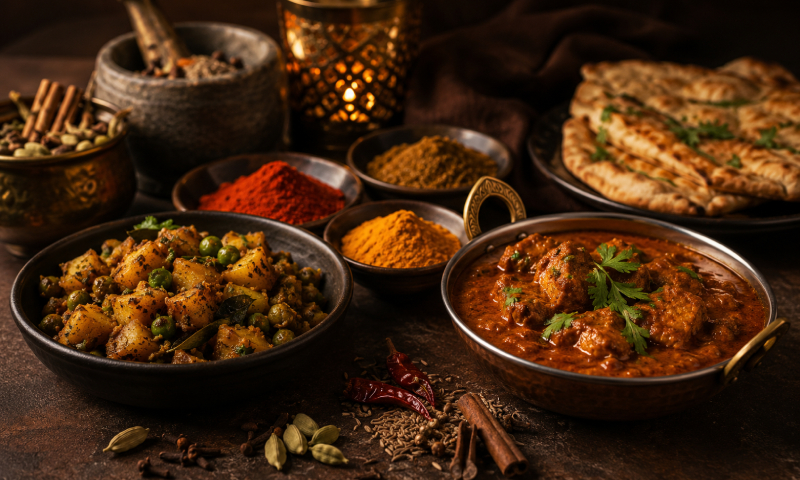
Masalas come in three forms. Dry masala is ground spices with no liquid, like garam masala or the thing sold here as curry powder. Wet masala is spices ground with onion, garlic, ginger, tomato or coconut into a paste, which is how almost every curry base starts. Whole spices aren’t ground at all: cardamom pods, cassia bark, cumin seed, going straight into hot fat.
Once you know that, half of the Ice n Spice Indian Restaurant & Bar menu reads differently.
The bit that matters: when the spice goes in
Here’s what separates a curry with depth from one that tastes like tinned tomato with chilli stirred through it. It isn’t the ingredient list. Two kitchens can use identical spices and produce completely different food. It’s the timing.
Whole spices go in first, into hot fat. This is tempering, called tadka or chaunk depending on who you ask. Cumin seed, cardamom, cassia and cloves hit ghee or oil at the start, and the heat pulls their aromatic oils into the fat, which carries that flavour through everything else in the pot. It takes seconds. Burnt cumin turns bitter and can’t be rescued, so a ruined tempering means starting again.
Ground spices go in during the middle. Turmeric, ground coriander and chilli powder go in after the onions have coloured, and need a minute or two in the oil before any liquid arrives. Cooks call this bhuna. Raw ground spice tastes chalky, and simmering later doesn’t fix it. The sign it’s done is oil separating at the edges of the pan.
Finishing masala goes in at the end. Garam masala, off the heat or close to it, in the last minute. It’s an aroma, not a foundation, and boiling it for half an hour drives off everything worth having.
Most flat curries are a sequencing failure, not a recipe failure. Everything went into the pot at once with the tomato and boiled for forty minutes. The spices are technically present. They’ve merged into one muddy note. It’s a large part of why a home version rarely matches the restaurant one, which we’ve written about in our home versus restaurant butter chicken post.
What is garam masala?
Garam masala means “warm spice mix”. Garam is warm, but in the sense of warming the body, not chilli heat. There’s often no chilli in it at all, which catches out people who buy a jar expecting it to make dinner spicier.
A common blend runs to cassia bark, green and black cardamom, cloves, black pepper, cumin, coriander seed and bay leaf, sometimes with nutmeg or mace. The spices are toasted, then ground.
Two things about it are worth knowing.
It’s a finishing spice, not a base. It goes in at the end. Plenty of recipes written for Western home cooks put it in early with the turmeric and chilli, which wastes it.
Every family has a different one. This is the part supermarket jars flatten completely. Garam masala isn’t a fixed formula, it’s a household recipe. Jasvinder’s is Rajasthani, heavier on black pepper and cassia than the Punjabi versions, where more cardamom goes in. Ask ten Indian cooks and you’ll get ten different jars, and most will tell you theirs is the correct one.
Supermarket blends aren’t bad so much as old. Ground spice loses its aromatics within months, and a jar open in a warm cupboard since last winter is mostly dust. Buy small amounts more often.
Chaat masala and tandoori masala
Chaat masala is the sour one, and most Australians have never tasted it. It’s built on dried mango powder (amchur) and black salt (kala namak), with cumin, ajwain and black pepper. The black salt gives it a faintly sulphurous smell, which puts people off for about four seconds.
It isn’t cooked into anything. It’s dusted over food at the end: fried snacks, raw sliced onion, cut fruit. Sour, salty and savoury at once. The name comes from chaat, the family of Indian street snacks it belongs to.
Tandoori masala is the marinade blend. It goes into yoghurt with ginger, garlic and lemon, and meat sits in that for hours before it sees the oven. Coriander, cumin, the garam masala spices, and Kashmiri chilli or paprika for colour.
The red of a good chicken tikka comes from Kashmiri chilli, which is bright and fairly mild. Plenty of places use food colouring instead. We don’t, so ours is a dull brick red rather than traffic cone orange, and that’s what it should look like. More on the oven in our guide to what a tandoor is.
What “masala” means in a dish name
Once masala means spice mix, dish names stop being mysterious. The word is doing one of two jobs: telling you the dish is built on a spiced gravy, or naming the blend involved. On our menu:
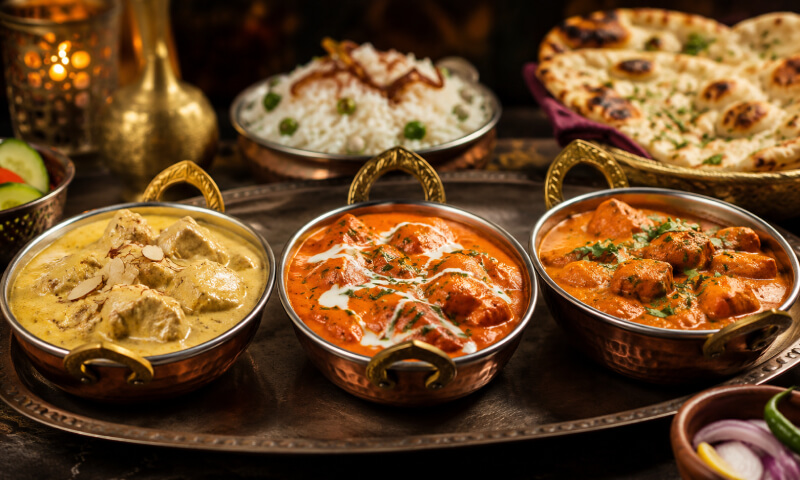
Chicken Tikka Masala. Tandoori-cooked chicken pieces (tikka) in a spiced tomato gravy. The masala is the gravy. Where the dish came from is genuinely contested, with Glasgow and Punjab both claiming it. We pull it apart against butter chicken in our butter chicken versus tikka masala comparison.
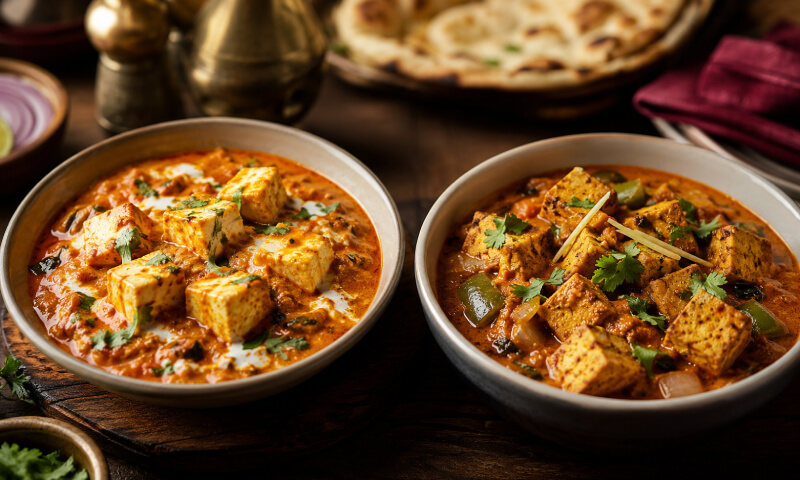
Paneer Butter Masala. Same structure with paneer instead of chicken, in a butter and tomato gravy.
Fish Masala. A Chef’s Special, and a different animal to Fish Butter Masala. Sharper, more assertive, without cream rounding the edges off.
Channa Masala. Chickpeas in a fairly dry onion and tomato masala, and one of the vegetarian dishes on our menu that’s vegan as cooked.
Notice what the word doesn’t tell you. Nothing about heat, and nothing about whether there’s cream in it, which is the thing to know if you’re weighing up how rich a dish is. Two masala dishes on one menu can sit at opposite ends of both scales, which is why we group dishes by gravy family in our types of Indian curry guide.
What people ask us on Margaret Street
The version we get most at the counter is “is the masala one the mild one?” Fair question, given how loosely the word gets used around town. The answer is that masala tells you nothing about heat, and since every curry is cooked mild, medium or hot, the heat is your decision rather than the dish’s.
The second most common is somebody asking to buy a jar of Jasvinder’s garam masala to take home. We don’t sell it. [CONFIRM: whether the kitchen would consider selling house-ground garam masala]
Toowoomba also gets properly cold between May and August, colder than visitors from Brisbane expect, and orders shift in that window towards the deeper, heavier-spiced dishes. Laal Maas and Rogan Josh do most of their work in July. In February nobody wants them.
Frequently asked questions
What does masala mean in English?
It means a mixture of spices. That applies whether the mix is ground powder, a wet paste, or whole spices going into hot oil. It isn’t the name of a dish or a flavour, so “a masala” on its own doesn’t describe anything until you know which mix is meant.
Is masala spicy?
Not necessarily. A masala is a spice blend, and plenty contain no chilli at all, garam masala included. Heat depends on whether chilli is in that particular mix. Every curry we cook is made mild, medium or hot to order, so the word in the dish name doesn’t decide it.
What is garam masala used for?
It’s a finishing blend, added in the last minute of cooking or off the heat, to give a dish warmth and aroma. It isn’t a base seasoning and does little if it’s boiled for long. Typical spices are cassia, cardamom, cloves, black pepper and cumin.
Is garam masala the same as curry powder?
No. Curry powder is a British invention aimed at approximating a whole curry in one jar, usually heavy on turmeric, and it goes in early. Garam masala is an Indian finishing blend of warm aromatic spices and goes in at the end. They aren’t interchangeable.
What is chaat masala?
A sour, salty seasoning built on dried mango powder and black salt, with cumin and black pepper. It isn’t cooked into food. It’s sprinkled over fried snacks, sliced onion or cut fruit at the last second. The black salt gives it a sulphurous smell that’s part of the appeal.
Does masala mean the sauce?
Loosely, sometimes. In a name like Paneer Butter Masala, the masala is effectively the spiced gravy. That’s the word used as shorthand. Strictly, the masala is the spice mixture that flavours the gravy, not the gravy itself.
Why does my home curry taste flat compared to a restaurant one?
Usually the spice sequencing. Whole spices go into hot fat at the start, ground spices need a couple of minutes in oil before liquid is added, and finishing blends go in at the very end. Everything in the pot at once gives you one muddy flavour instead of layers.
Do you use pre-made spice pastes?
No. Jasvinder grinds the house blends and the curry bases are built in the kitchen. It’s why two of our tomato-based dishes taste like different dishes rather than one gravy with more chilli in it, which is the tell for a kitchen working from a single master base.
Next time you’re in, order two masala dishes at once and taste them side by side. Fish Masala and Paneer Butter Masala is a good pairing, because the word in the name is about all they have in common. Both are on the full menu, and we’re on Margaret Street, lunch from 11:30 and dinner from 4:30, seven days.