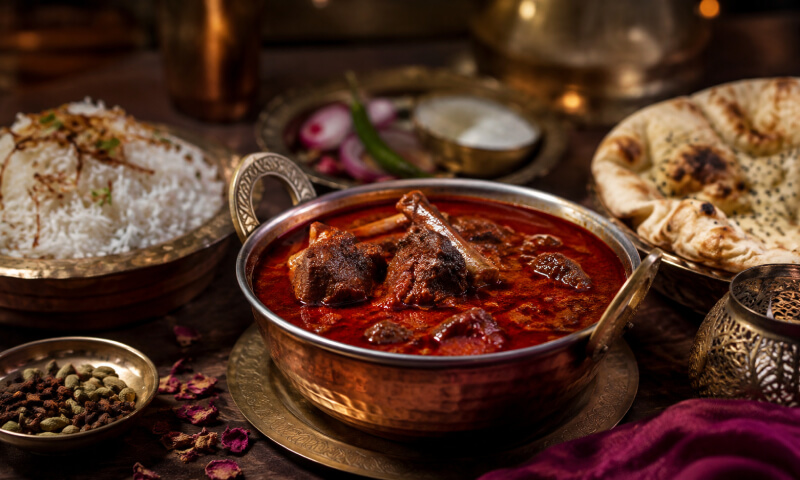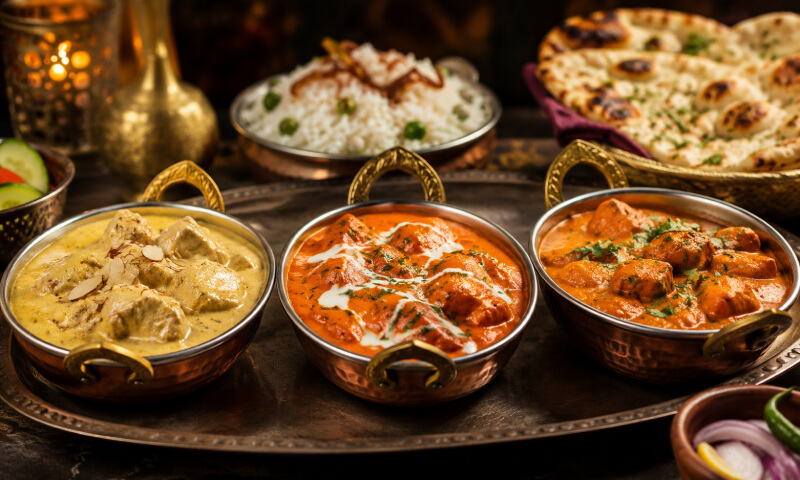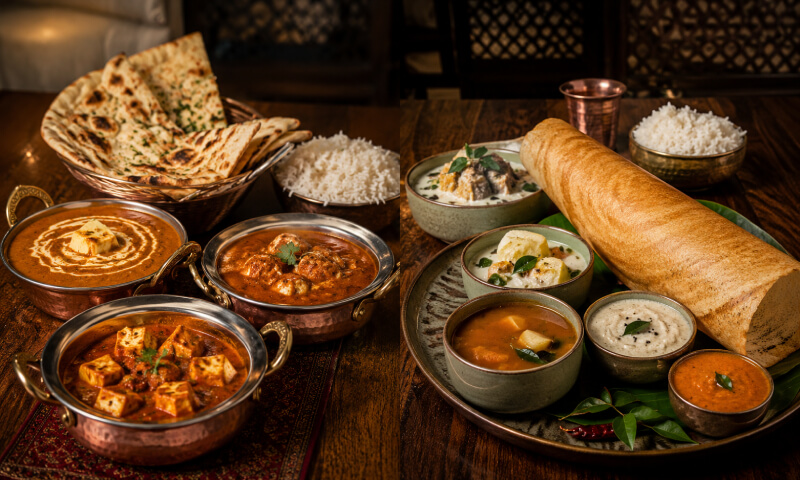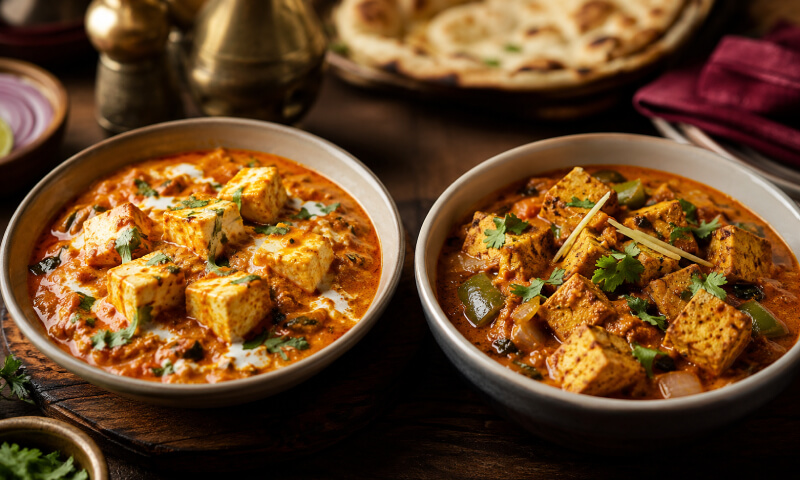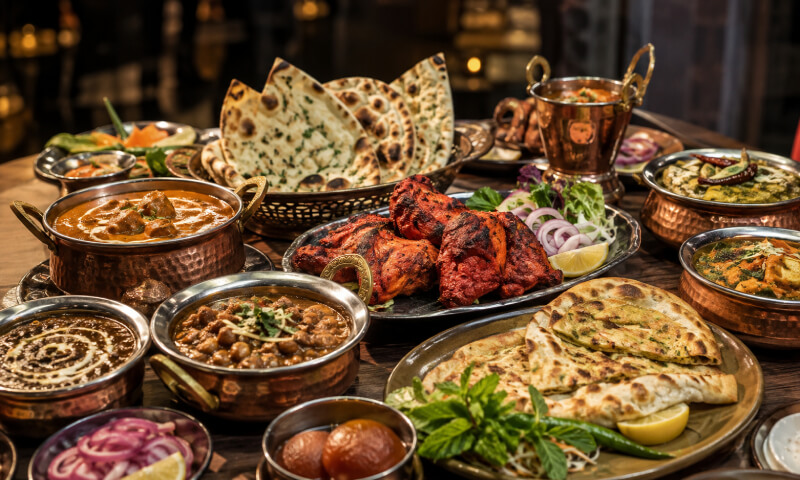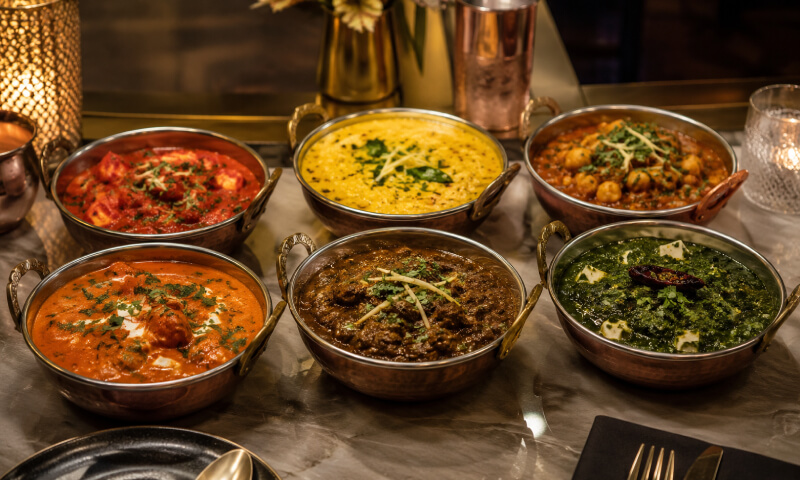
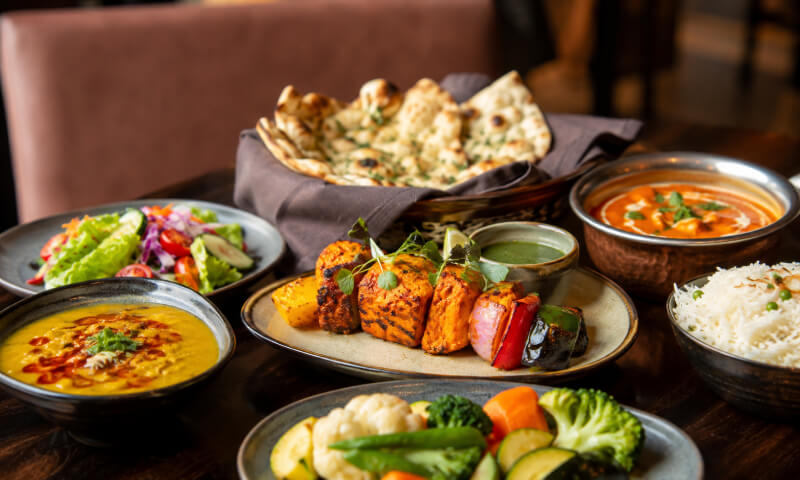
It depends entirely on what you order. Indian cooking is built on lentils, legumes, vegetables and spices, and a dal with rice is one of the better balanced meals you can eat. But restaurant favourites like butter chicken and korma carry a lot of cream, butter and cashew, and the breads add up quickly. The cuisine isn’t one thing.
Why the question is hard to answer straight
“Indian food” covers a subcontinent and thousands of dishes. A home cook in Tamil Nadu making sambar and rice, and a restaurant in Australia making butter chicken with a cup of cream in it, are both cooking Indian food, and they produce meals with almost nothing in common nutritionally.
Most articles answering this question pick a side. Either Indian food is a spice-driven health cuisine, or it’s all deep-fried and swimming in ghee. Both are marketing. We cook this food for a living and neither version matches what leaves our kitchen.
So here’s the useful version: what’s genuinely good about it, what genuinely isn’t, and how to order accordingly.
What’s genuinely good about it
Legumes and lentils are everywhere. Dal, chickpeas, kidney beans. These are high in fibre and plant protein, cheap, and filling. Most Western diets don’t include much of any of them. A bowl of Yellow Dal Tadka is close to the definition of a well-put-together food, and it isn’t a side dish in India, it’s the centre of the meal.
Vegetables are cooked as main courses, not as an afterthought. Aloo Gobi, Aloo Baingan, Vegetable Jalfrezi and Channa Masala are proper dishes that happen to be built entirely on vegetables and legumes. Nobody eats them thinking they’re eating virtuously. They’re just good, which is a far more sustainable way to eat more vegetables than making yourself do it. Our vegetarian dishes guide runs through all of them.
Spices instead of salt and sugar. A curry gets most of its flavour from a toasted spice mix, browned onion, ginger, garlic and tomato. That’s a lot of taste for very little of anything you’d want to limit. It’s a real advantage over cuisines that build flavour mainly from butter, cheese or sugar.
Yoghurt is used constantly. In marinades, in raita, stirred through gravies to add body. It’s doing work that cream would otherwise do, with less fat.
A dal and rice meal is genuinely balanced. Legumes and grain together give you a complete protein, and adding a vegetable dish rounds it out. Half of India eats a version of this every day. There’s a reason it’s lasted.
We’ll leave the turmeric claims alone. You’ll find plenty of pages telling you it cures things. The research is a lot less settled than those pages suggest, curcumin is poorly absorbed by the body, and the amount in a curry is small. We put turmeric in our food because it tastes right and colours the gravy, not as medicine.
What genuinely isn’t
The cream-based curries are rich, and there’s no getting around it. Butter chicken and korma are built on butter, cream and ground cashew. That’s what makes them taste the way they do. A good butter chicken is a rich dish by design, and a restaurant that made a lean version would be making something else. Same goes for Shahi Paneer, Malai Kofta, Dal Makhani and Butter Prawns. Order them, enjoy them, just don’t tell yourself they’re light. If you want to know where the dairy sits in a dish, our ghee and hidden dairy post maps it.
Bread and rice add up faster than people think. A naan is a decent amount of refined flour, and buttered or stuffed naan more so. Order two breads plus rice between two people and the carbohydrate load is doing more than the curry is. Our guide to Indian bread types covers what’s what.
Deep-fried entrees are deep-fried entrees. Samosas, onion bhaji and spring rolls are fried. They’re delicious and they’re fried, and no amount of talk about spices changes that.
Restaurant portions are restaurant portions. Any kitchen cooking for an Australian dining room uses more fat than an Indian home cook would, because that’s what people expect from a restaurant meal. We’ve written honestly about that gap in our post on butter chicken at home versus in a restaurant.
How to order a lighter meal here
This is the part that’s actually useful. All of it is easy to do and none of it involves ordering something joyless.
Start with a tandoori entree instead of a fried one. Chicken Tikka, Lamb Seekh Kebab or Lamb Cutlets from the Royal Entrees are marinated in yoghurt and spice and cooked in the tandoor, with the fat dripping away rather than being absorbed. Onion Bhaji and Spring Rolls sit in oil. Same course, very different meal. More on the oven in our tandoor guide.
Choose a tomato-based curry over a cream-based one. Chicken Tikka Masala, Karahi Chicken, Vindaloo, Madras, Jalfrezi and Rogan Josh are built on onion and tomato. Butter Chicken, Korma, Shahi Paneer and Malai Kofta are built on cream and nuts. That single swap changes a meal more than anything else on this list. Our types of Indian curry post sorts every dish into its family.
Order a dal. Yellow Dal Tadka rather than Dal Makhani. It costs less than almost anything else on the menu, it’s the best thing on the table for balance, and it makes the richer dish next to it taste better by contrast.
Steamed rice instead of naan. Or one naan shared between the table instead of one each. Jeera rice is cumin-tempered and has more going on than plain steamed if you want flavour without butter.
Add a vegetable dish to a meat order. Aloo Gobi or Channa Masala alongside a meat curry changes the balance of the whole table for about the price of a coffee.
If you order a Chicken Tikka entree, a Chicken Tikka Masala, a Yellow Dal Tadka and steamed rice for two people, you’ve had a full Indian meal, you haven’t gone without anything, and it’s a genuinely reasonable dinner.
What we’re not
We cook food. We’re not nutritionists and this isn’t nutrition advice. We can tell you what goes in a dish and roughly how it’s cooked, which is more than most menus manage, but we can’t tell you what’s right for you.
If you have diabetes, high cholesterol, coeliac disease, a heart condition or anything else where diet matters medically, talk to your GP or a dietitian rather than a blog post. What we can do is answer questions honestly when you ring or come in, including telling you when the answer is “that one has a lot of cream in it”.
One Toowoomba note. Winter here is genuinely cold, colder than most of Queensland, and every year from about May the orders shift towards the heavier dishes. That’s a reasonable thing for your appetite to want in July. It’s also worth knowing that the lighter half of the menu doesn’t go anywhere, and the tandoori entrees and dal are just as good in the cold.
Frequently asked questions
Is butter chicken healthy?
No, and it isn’t trying to be. Butter chicken is built on butter, cream and tomato, and that richness is the dish. It’s a good thing to eat, not a light one. If you want something in the same family with less cream, Chicken Tikka Masala is tomato-led and noticeably lighter, though still not a diet dish.
What is the healthiest Indian dish to order?
A lentil or chickpea dish with plain rice is hard to beat. Yellow Dal Tadka, Channa Masala or Aloo Gobi with steamed rice gives you fibre, plant protein and vegetables without much added fat. A tandoori entree such as Chicken Tikka is the best choice on the meat side.
Is Indian food good for weight loss?
Some of it can fit a lower calorie way of eating and some of it clearly can’t, which is true of every cuisine. Tandoori dishes, dals, chickpea and vegetable curries with plain rice are moderate. Cream-based curries with two breads are not. We’re not the right people to give weight advice, so speak to a dietitian.
Is curry good for you?
“Curry” isn’t one thing. A tomato and onion based curry full of vegetables and legumes is a good meal. A cream and cashew based one is a rich meal. The spices themselves are fine and add flavour without much salt or sugar, but they don’t cancel out what else is in the pot.
Does turmeric have health benefits?
There’s ongoing research and a lot of overstatement online. Curcumin, the compound usually discussed, is poorly absorbed, and the quantity in a serve of curry is small. We use turmeric because of what it does to flavour and colour. We wouldn’t order dinner as a health intervention.
Is naan or rice better for you?
Plain steamed rice is generally the lighter choice, since naan is refined flour and usually has butter or ghee brushed on it, with cheese and paneer versions heavier again. If you want bread, share one across the table rather than ordering one each. All our breads contain wheat.
Is Indian food high in sodium?
It can be, since salt is part of how a gravy is balanced, and pickles and papadums add more. Ours are seasoned to taste rather than to a target. If you’re watching sodium for medical reasons, tell us when you order and talk to your doctor about what range you’re aiming for.
Are your dishes suitable for coeliacs?
Many of the curries are gluten free as cooked, and they’re marked (GF) on the menu, but all our breads contain wheat and some entrees do too. We were voted number one for gluten free in Toowoomba by local diners, and we take it seriously. Detail is on the gluten free page.
Next time you’re in, try ordering a Yellow Dal Tadka alongside whatever you usually get. It’s the cheapest thing you’ll order and often the one people finish first. Everything’s on the full menu, and we’re on Margaret Street seven days.