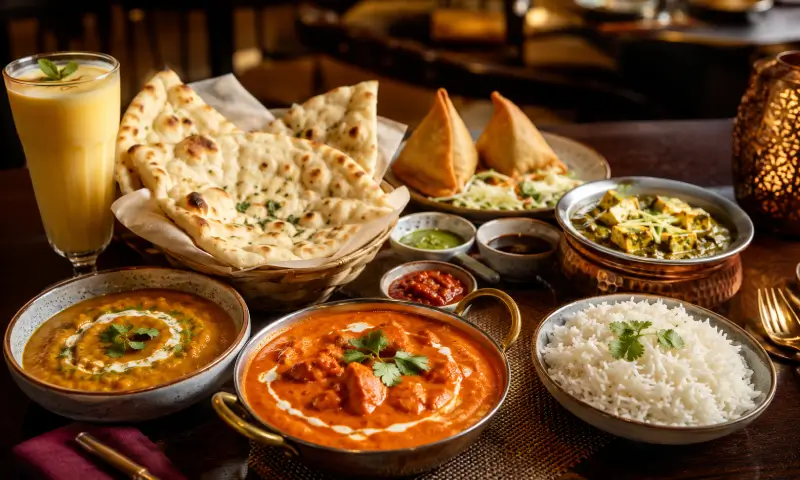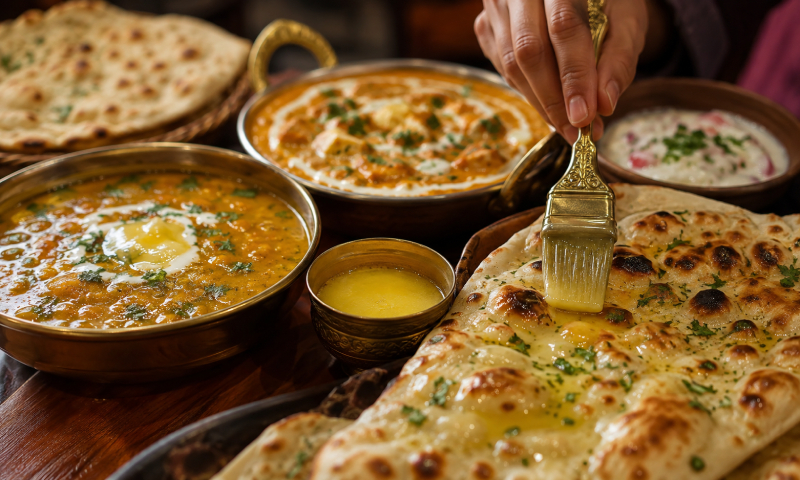
Ghee is butter that’s been simmered until the water evaporates and the milk solids separate out and brown, then strained. What’s left is close to pure butterfat with a nutty, toasted flavour and a high smoke point. It’s the traditional cooking fat across much of India, and because the solids are removed it contains only trace lactose, though not reliably none.
How ghee is made, and why it tastes different to butter
Butter is roughly four-fifths fat, with water and milk solids making up the rest. Heat it gently and those parts separate. The water steams off, the solids sink and toast, and the fat clears.
The browning is the whole point. Plain clarified butter is strained before the solids colour, so it tastes like mild butter. Ghee is cooked further, until the solids go golden brown and give off a nutty, almost caramel smell, and that flavour goes into the fat before it’s strained. Then it’s poured off and the browned solids are discarded.
What’s left is shelf-stable at room temperature, since there’s no water or protein to spoil. In a hot country without refrigeration that mattered enormously, and it’s a large part of why ghee became the standard fat rather than butter.
Why Indian kitchens use it
It handles high heat. Ghee’s smoke point is well above butter’s, since the milk solids that burn have already been removed. Tempering whole spices means fat hot enough to make cumin seeds crackle within seconds, and butter would scorch at that temperature.
It carries flavour. Fat is the vehicle for spice. When cardamom, cassia and cumin go into hot ghee, the aromatic compounds dissolve into the fat and then travel through the entire dish. That’s the mechanism behind a tadka, and we’ve written more about the sequencing in our guide to what masala means.
It tastes of something. Oil is neutral. Ghee brings its own toasted note, which is why a dal finished with ghee tastes different to the same dal finished with sunflower oil. Not better in every case, but different, and in some dishes the ghee is doing half the work.
It has cultural weight. Ghee has a place in Indian festivals and ritual that neither butter nor oil has, which is part of why it persists in home kitchens even where cheaper fats are available.
Not everything is cooked in it, though. Plenty of Ice n Spice Indian Restaurant & Bar kitchens use neutral oil day to day and save ghee for tempering, finishing, and festive dishes. Ours works the same way.
Is ghee lactose free? Be careful here
Ghee is very low in lactose, far lower than butter, but “very low” and “none” are different words and the difference matters if you react badly.
Lactose sits in the milk solids and the water, and both are removed when ghee is made. What’s left is close to pure fat, which is why plenty of people who can’t tolerate milk find it causes them no trouble.
There are three qualifications, and they’re real ones.
How well the solids were removed varies. A carefully strained commercial ghee has less residue than one made in a home kitchen. There’s no single standard.
Trace amounts are still dairy. Ghee is a milk product. It is not vegan under any definition, and it is not appropriate for anyone with a milk protein allergy, which is a different thing to lactose intolerance and a much more serious one. Casein traces can remain.
People vary. Some people with lactose intolerance handle ghee without noticing. Others react. We can’t tell you which you are.
If you have a diagnosed dairy allergy, treat ghee as dairy and avoid it. If you’re lactose intolerant and curious, that’s a conversation for your GP or dietitian rather than a restaurant blog. Either way, tell us when you order and we’ll tell you honestly what’s in a dish.
Where dairy hides in Indian food
This is the genuinely useful part, and it catches out vegans and dairy-avoiders constantly. Indian food has a reputation for being easy to eat dairy free, probably because so much of it is vegetarian. The reality is that dairy is threaded through the cuisine in five places, and only one of them is obvious.
1. Ghee in the tempering. A dish can be nothing but lentils, water and spices and still not be vegan, because the tadka poured over the top at the end was made with ghee. This is the one that gets missed, because there’s no visible dairy in the finished bowl. Always ask.
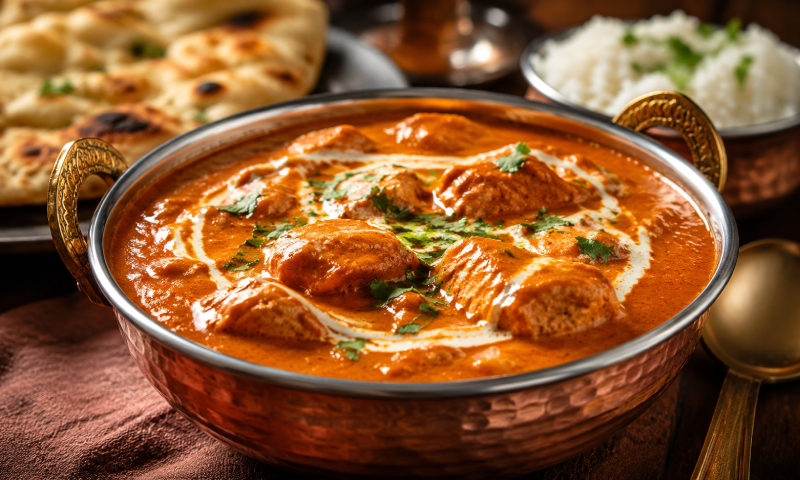
2. Cream finishing the gravy. Cream goes into rich gravies at the end, often in quantities that would surprise you. Butter chicken, korma, Shahi Paneer, Dal Makhani and Malai Kofta all depend on it. Malai literally means cream, so the name is a fair warning.
3. Yoghurt in marinades. Everything that goes into a tandoor sits in a yoghurt marinade first, because the acid tenderises the meat and the thickness makes the spice cling. Chicken Tikka, Lamb Seekh Kebab and Lamb Cutlets are all marinated in yoghurt. Yoghurt also gets stirred into some gravies for body, and it’s the base of raita.
4. Paneer as the protein. Paneer is fresh cheese. It’s in the vegetarian section, it looks like tofu and it isn’t. We’ve written about the difference in paneer versus tofu, and the short version is that no dish with paneer in it is ever vegan.
5. Naan dough. This is the one that ruins vegan dinners. Naan is typically made with milk or yoghurt, and often finished with butter or ghee. All of our breads contain dairy as well as wheat. A vegan meal at an Indian restaurant runs on rice, not bread, and the sooner you know that the better your order will be. Our naan guide covers the varieties.
What that means on our menu
Here’s the honest map, so you don’t have to guess.
Vegan as cooked: Channa Masala, Aloo Gobi, Aloo Baingan, Aloo Palak, Vegetable Jalfrezi.
Vegan on request: Yellow Dal Tadka, if the tempering is made with oil rather than ghee. Say so when you order and we’ll do it that way.
Not vegan: all four paneer curries (Paneer Butter Masala, Shahi Paneer, Palak Paneer, Karahi Paneer), plus Chilli Paneer Dry and Paneer Naan. Dal Makhani, which is butter and cream. Malai Kofta, which is cream. Vegetable Korma. Butter Chicken and everything else in the cream-based family. Every bread on the menu, without exception.
Rice is your friend. Steamed, Saffron, Coconut and Jeera rice are all dairy free, and a vegan meal here is built on rice with two or three of the vegan curries in the middle of the table. That’s a better meal than it sounds, and our vegetarian dishes guide explains why the vegetable dishes carry a table on their own.
Full current detail is on our vegan and vegetarian page, and if you’re ordering for a mixed group, ring us on 07 4659 7777 and we’ll talk it through rather than guessing at the counter.
Frequently asked questions
Is ghee healthier than butter?
It’s almost entirely saturated butterfat, so calorie for calorie it’s similar to butter and not a health food. Its practical advantages are a higher smoke point and a longer shelf life, plus flavour. Claims that ghee is a health product are mostly marketing. Our post on whether Indian food is healthy takes the wider question on.
Is ghee vegan?
No. Ghee is made from butter, which is made from milk. It’s a dairy product regardless of how little lactose it contains, and it’s not suitable for a vegan diet. If you’re vegan, the question to ask about any Indian dish is whether the tempering used ghee or oil.
Is ghee dairy free?
No. It’s very low in lactose because the milk solids are removed, but trace lactose and milk proteins can remain, and it’s still made from milk. Anyone with a milk allergy should avoid it entirely. Low lactose is not the same as dairy free, and the distinction matters medically.
Is ghee the same as clarified butter?
Not quite. Both have the water and milk solids removed, but clarified butter is strained before the solids brown, so it stays mild. Ghee is cooked longer, until the solids toast and give up their flavour into the fat. All ghee is clarified butter. Not all clarified butter is ghee.
Do you cook everything in ghee?
No. Like most working kitchens we use neutral oil for a lot of day to day cooking and ghee where its flavour matters, particularly in tempering and finishing. That’s exactly why Yellow Dal Tadka can be made vegan on request. Ask when you order and we’ll tell you how a specific dish is done.
Is naan vegan?
No. Naan dough contains dairy, usually milk or yoghurt, and breads are often finished with butter or ghee. Every bread on our menu contains dairy and wheat. If you’re eating vegan, order rice instead, which is what most vegan diners here do once they know.
Can I get a dairy free curry?
Yes. Channa Masala, Aloo Gobi, Aloo Baingan, Aloo Palak and Vegetable Jalfrezi are dairy free as cooked, and Yellow Dal Tadka can be made with oil instead of ghee. Tell us it’s a dairy issue rather than a preference and we’ll be careful about it. We can’t guarantee a dairy free kitchen, so say so if the reaction is serious.
Does ghee contain lactose?
Only trace amounts, since the lactose sits in the milk solids and water that get removed. How much remains depends on how thoroughly it was strained, so there’s no guaranteed figure. Many lactose intolerant people tolerate it fine. If you react reliably to dairy, ask your GP or dietitian rather than experimenting at dinner.
If you’ve never paid attention to it, order a Yellow Dal Tadka and notice what the tempering does to it, because that spoonful of hot ghee poured over the top at the last second is most of the dish. We’re on Margaret Street in the CBD, seven days, and we’re happy to answer dairy questions when you ring.