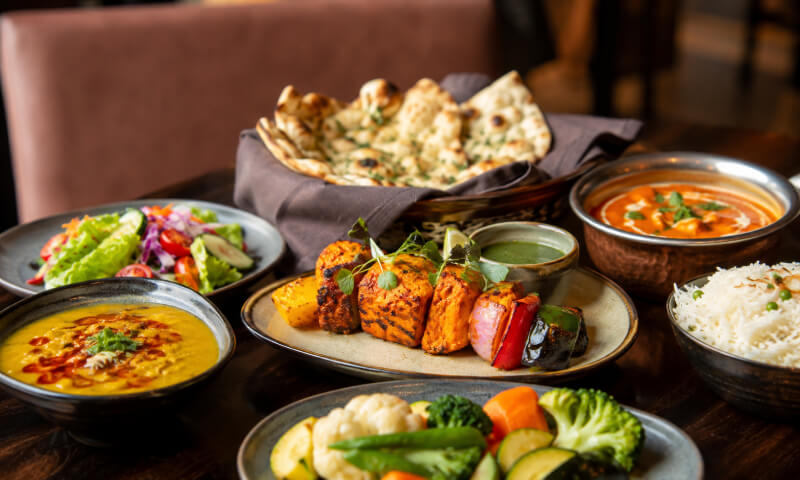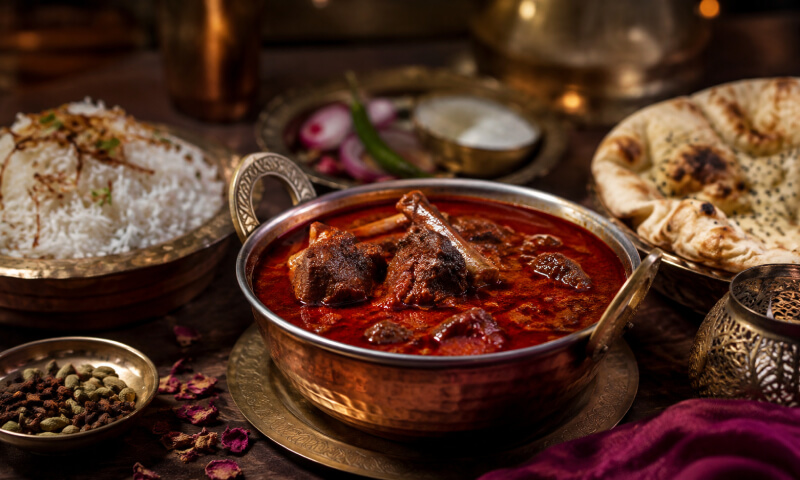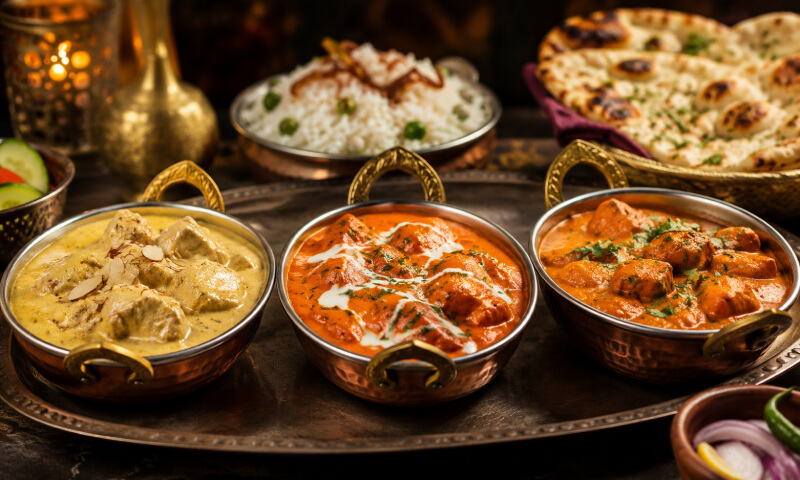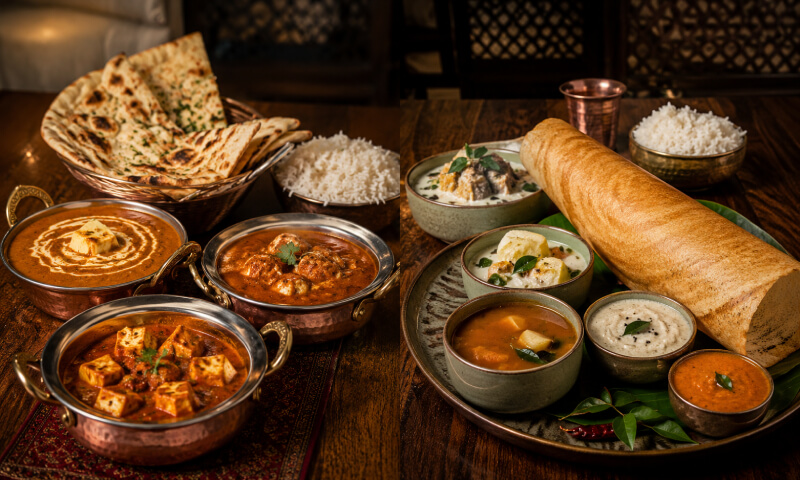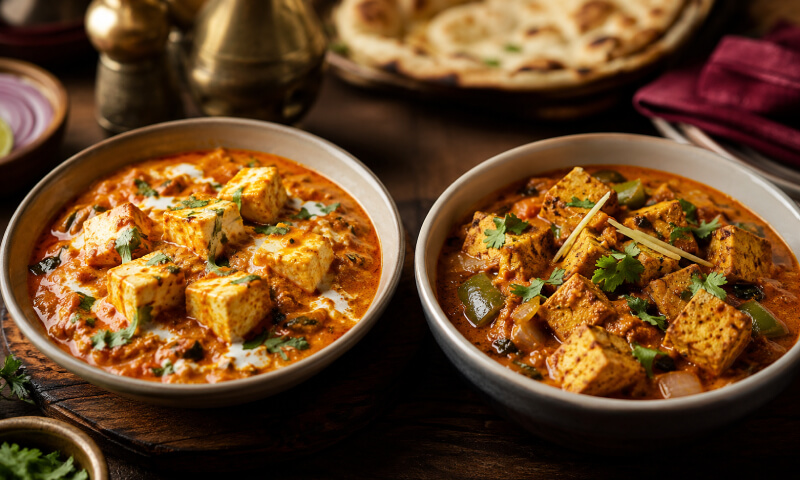
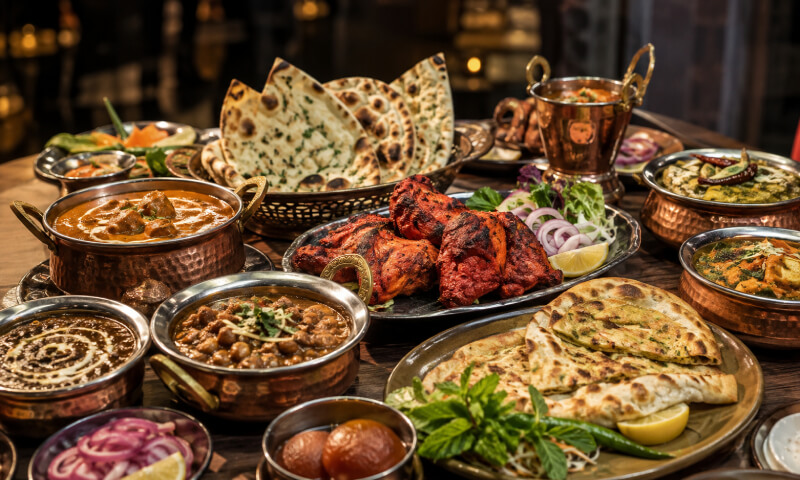
Punjabi food is the cooking of the Punjab region in north-west India and eastern Pakistan, built on wheat, dairy and the tandoor. Butter chicken, tandoori chicken, naan, dal makhani, palak paneer and chana masala are all Punjabi. Because most Indian migration to Australia and Britain came from Punjab, Punjabi food became the default idea of Indian food abroad.
Read a menu and count
Take any Indian menu in Australia. Butter chicken, tandoori chicken, chicken tikka, naan, dal makhani, palak paneer, chana masala, malai kofta, karahi dishes, lassi. Nearly all of it is Punjabi or was made popular by Punjabi cooks.
India has more than two dozen states and something like a dozen major regional cuisines, most of which never appear on an Australian menu at all. What most of us have been eating for thirty years is one region, cooked well, presented as a whole country.
That’s not a criticism of the food. Punjabi cooking is genuinely good and it deserves the reach it has. But it’s worth knowing what you’ve been eating, especially if you’ve formed opinions about “Indian food” based on it.
Five rivers, wheat and cattle
Punjab means five waters, after the rivers running through it. It’s flat, well watered and fertile, and it’s been India’s wheat belt for a very long time.
Wheat means bread with every meal. Roti at home, paratha stuffed with potato or radish for breakfast, naan when there’s a tandoor going, and makki di roti made from maize flour in winter, eaten with mustard greens.
The other half of the picture is livestock. Punjab has a deep dairy tradition, and Punjabi cooking uses it without restraint. White butter, cream, ghee, paneer, yoghurt and lassi all sit at the centre rather than the edges. When people say Indian restaurant food is rich, what they mean is that Punjabi food is dairy-heavy, and they’re right.
Put those together and you get the profile: wheat bread, thick gravies built on onion, tomato, ginger and garlic, finished with butter or cream, with plenty of paneer and lentils for the days without meat. Punjabi cooking also has a large vegetarian repertoire, which people underestimate because the meat dishes get the attention.
The tandoor was a village institution
The tandoor is the piece of Punjabi culture that changed how the world eats Indian food, and it started as shared infrastructure.
Villages had a communal tandoor. Households brought their dough, cooked their bread in the same oven, and picked up the day’s news while they waited. Firing a clay oven to 400 degrees for one family’s roti makes no sense. Firing it for twenty families does.
That oven does three jobs at once. It bakes bread stuck to the wall, it roasts marinated meat on skewers, and it holds heat for hours once it’s up. Which is exactly why it suited restaurants when Punjabi families started opening them. One piece of equipment, running all night, producing naan, kebabs and tandoori chicken. Our post on how a tandoor works goes into the mechanics.
Tandoori chicken and the whole tikka family come out of that oven, and so does chicken tikka masala, which is what happens when you take cooked tikka and put it in a gravy. Our Lamb Cutlets, Lamb Seekh Kebab and Chicken Tikka come off the same equipment.
Partition, Delhi, and how it all spread
The modern Punjabi restaurant dishes are newer than most people assume.
After Partition in 1947, large numbers of Punjabi families moved to Delhi and elsewhere, and many went into food. The restaurants they opened put tandoor cooking and rich Punjabi gravies in front of a national audience for the first time. Butter chicken and dal makhani both trace to that period and that scene.
The specific origin stories are contested and we’re not going to pretend otherwise. The most repeated version credits a Delhi restaurant with inventing butter chicken from leftover tandoori chicken finished in a tomato and butter gravy, and there’s litigation and rival claims around it. What isn’t contested is the broad shape: these dishes came out of a Punjabi restaurant culture in the mid twentieth century and travelled from there. We’ve written more on that in our post on what butter chicken is.
Then migration did the rest. Punjabi families moved to Britain, Canada and Australia in large numbers, opened restaurants, and cooked what they knew. Add the British curry house, which fixed the expected menu format decades before most Australians had been to India, and you get the situation we have now.
What that leaves out
A short list of things you will almost never see on an Australian Indian menu. Bengali fish cooked in mustard oil. Gujarati sweet and sour dals. Kerala fish moilee and appam. Tamil sambar and rasam. Maharashtrian misal. Assamese and north-eastern cooking of any kind. Chettinad. Sindhi kadhi. Most Rajasthani food.
That’s a lot of country to miss. It’s also why we care about the handful of dishes on our own menu that don’t fit the Punjabi mould.
Where our menu goes off the Punjabi map
Jasvinder is from Rajasthan, not Punjab. He cooks a largely Punjabi menu because that’s the trade, and because that’s what people in Toowoomba come in wanting. Fair enough. But the dishes that sit outside it are the ones we’d point a curious diner towards.
Laal Maas is Rajasthani, and it’s the closest thing on the menu to home cooking for the man making it. Dried red chilli, garlic, yoghurt, no tomato. Our post on Rajasthani food explains what’s behind it.
Goan Fish Curry and the two vindaloos come from Goa’s Portuguese-influenced coastal cooking, with vinegar and coconut doing work that butter and cream do in Punjab.
Lamb Dhansak is Parsi, from the Zoroastrian community that settled in western India centuries ago. Lentils and lamb cooked together, mildly sweet and sour. It’s not Punjabi and it’s not really North Indian either.
Lamb Rogan Josh is Kashmiri by origin, though what nearly every Australian restaurant serves under that name, ours included, has been through a Punjabi kitchen on the way.
The madras dishes carry a southern name and a southern habit of dried red chilli in a thinner gravy, though madras as a menu item is a restaurant invention rather than a dish from Tamil Nadu.
Five entries out of a long menu. That’s the real ratio, and pretending otherwise would be silly.
What Toowoomba actually orders
Butter chicken is the number one seller and we don’t expect that to change. Ever. Garlic naan goes out with almost everything. Those two are Punjabi through and through, and the whole town runs on them.
What’s shifted over the years we’ve been on Margaret Street is that more people ask what’s different. Someone reads Laal Maas on the menu and asks what it is. Someone who’s been to Goa orders the fish curry without prompting. That’s the good part of the job.
If you want a Punjabi meal done properly rather than by default, the order is Dal Makhani, a tandoori item like the Lamb Seekh Kebab, and garlic naan, with a Palak Paneer alongside. That’s closer to how a Punjabi family would eat than a single curry and rice.
Frequently asked questions
What is Punjabi food?
The cooking of the Punjab region across north-west India and eastern Pakistan. It’s built on wheat bread, dairy in the form of butter, cream, ghee and paneer, and the tandoor. Butter chicken, tandoori chicken, naan, dal makhani, palak paneer and chana masala are all Punjabi dishes.
Is butter chicken Punjabi?
Yes. It came out of Punjabi restaurant cooking in Delhi in the mid twentieth century, built on tandoori chicken finished in a tomato, butter and cream gravy. The exact origin story is disputed between competing claims, but the Punjabi lineage of the dish isn’t in doubt.
Why is most Indian food in Australia Punjabi?
Migration. A large share of Indian migration to Australia, Britain and Canada came from Punjab, and those families opened the restaurants. The tandoor also suits a commercial kitchen extremely well, and the British curry house had already fixed what an Indian menu was expected to look like.
Is Punjabi food spicy?
Rich more than hot. Punjabi cooking leans on whole spices, ginger, garlic and dairy, and a lot of the best known dishes are mild. Karahi dishes and some home cooking run hotter. If you want genuine heat on our menu, the Laal Maas or a vindaloo will get you there faster than a Punjabi dish will.
Is Punjabi food good for vegetarians?
Very. Punjab has a large vegetarian tradition, and dishes like dal makhani, chana masala, palak paneer, aloo gobi and malai kofta are all Punjabi. Our menu has thirteen vegetarian mains, several of them vegan as cooked, and there’s a page covering which is which.
What is the difference between Punjabi and North Indian food?
Punjabi is a region, North Indian is a much larger category that also includes Kashmiri, Rajasthani, Awadhi and others. Nearly all Punjabi food is North Indian, but plenty of North Indian food isn’t Punjabi. In restaurants the two words get used interchangeably, which is where the confusion starts.
Is naan Punjabi?
Naan is associated with Punjab and the wider north because it needs a tandoor, and the tandoor is a northern institution. Similar leavened breads exist across Persia and Central Asia, so it isn’t uniquely Punjabi. Every naan we make contains wheat, which matters if you’re eating gluten free.
What is a proper Punjabi meal at a restaurant?
Bread first, not rice. Order a tandoori item, a dal such as Dal Makhani or Yellow Dal Tadka, a paneer or vegetable dish, and plenty of naan or roti to share. Rice is a side rather than the base. Eating that way tastes noticeably different to one curry over rice.
Which dishes on your menu aren’t Punjabi?
Laal Maas is Rajasthani, Goan Fish Curry and the vindaloos are Goan, Lamb Dhansak is Parsi, and Lamb Rogan Josh is Kashmiri in origin. Those are the ones worth ordering if you already know the standard menu well. Everything else is broadly Punjabi or North Indian.
If you eat Indian food regularly and have never thought about which part of India it comes from, the easiest experiment is to order one Punjabi dish you know and one you don’t. Butter chicken and Laal Maas on the same table tells you more than any blog post can. We’re on Margaret Street, open lunch and dinner seven days.