
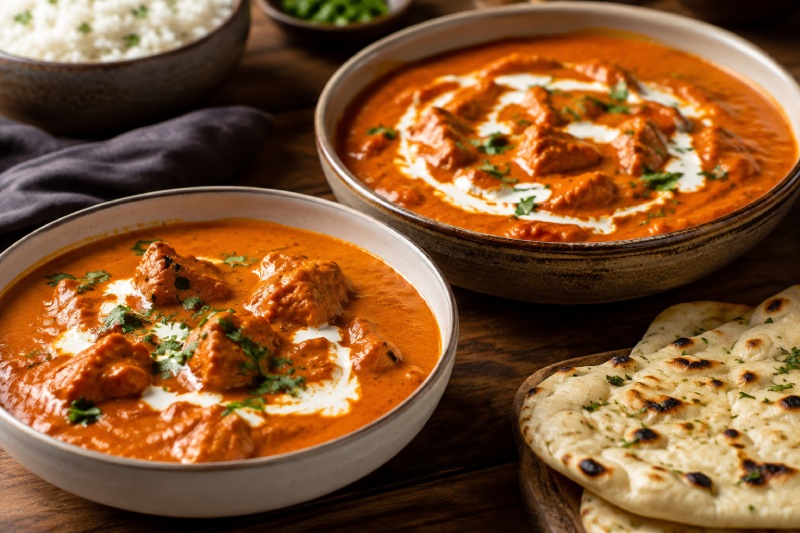
Homemade butter chicken tastes different for five reasons: a tandoor runs hotter than any home oven, restaurant chicken is marinated overnight in yoghurt, whole spices are bloomed in fat instead of powder being stirred in at the end, restaurants use far more butter and cream than you would, and the chicken is cooked separately rather than simmered in the sauce. Two of those you can fix at home. One you can’t.
This isn’t a recipe
There are already more butter chicken recipes online than anyone needs and we’re not adding one. Jasvinder’s stays in the kitchen.
What we can do is explain what happens in a commercial Indian kitchen that isn’t happening in yours. Once you know the mechanics, you can apply them to whatever recipe you already use. Some of it will get you most of the way there. Some of it won’t, and we’d rather say so than sell you a technique that doesn’t work.
1. The tandoor, and why your oven can’t do it
A tandoor is a clay oven, roughly a metre deep, fired with charcoal at the bottom. Working temperature sits somewhere around 400 to 480 degrees Celsius. A domestic oven tops out at about 250.
That gap changes the food completely. At tandoor temperature the yoghurt marinade sets and chars in a couple of minutes while the inside is still cooking, so you get blackened edges and juicy meat at once. At 220 degrees, chicken slowly dries out from the outside in while it waits for colour that never really arrives.
Something else happens too. The chicken hangs on vertical skewers, so fat and marinade drip onto the charcoal below, smoke, and rise back over the meat. The smokiness in good tandoori chicken is a by-product of the oven’s shape, not a flavouring.
Can you fix this at home? Not really, and anyone telling you otherwise is overselling. A very hot barbecue with the lid down gets you closer, as does a screaming hot cast iron pan followed by a blast under the grill. The dhungar method, where a piece of hot charcoal sits in a small bowl inside the covered pot with a little ghee on it, adds real smoke and is worth knowing. None of it reproduces a tandoor.
2. Overnight marination
Most home recipes say thirty minutes. Restaurants marinate overnight, often in two stages.
Yoghurt does more than add tang. Its acidity and enzymes break down the surface proteins, which keeps the meat tender under high heat and lets the spices travel further in than the outer millimetre. Salt works over time too, drawing moisture out and then back in carrying flavour with it.
Thirty minutes gets you seasoned chicken. Twelve hours gets you chicken that’s different all the way through. The two-stage version common in tandoor kitchens is a first marinade of ginger, garlic, lemon and salt, then a second with yoghurt and ground spices. The first opens the meat up, the second fills it.
Can you fix this at home? Completely, and for free. It costs nothing but planning the night before, and it’s the single biggest improvement most home cooks can make. If you change one thing after reading this, change this one.
3. Whole spices bloomed in fat, not powder stirred in at the end
Watch a home cook make curry and you’ll see oil, onion, garlic, a couple of teaspoons of ground spice from a jar, then liquid. Total spice contact with hot fat: about twenty seconds.
In a proper Indian kitchen the spices go in at the start and they go in whole. Cardamom pods, cloves, cinnamon, bay and cumin seed hit hot ghee before anything else and cook until they crackle and change smell. This is tempering, or tadka, and it isn’t ceremonial. The aromatic compounds in whole spices are fat soluble, so they only release properly into hot fat. Water-based cooking barely touches them.
Ground spices go in later, usually with the tomato, and they also need time in fat before liquid arrives. Add ground spice to a wet sauce and it never blooms, leaving a dusty, slightly raw taste people mistake for “not enough spice” and try to fix by adding more.
There’s an age problem too. Ground spices from a supermarket jar have often sat for a year, and the volatile oils are long gone.
Can you fix this at home? Yes, mostly. Buy whole spices, temper them in fat at the start, and give ground spices a proper minute in the pan before liquid goes in. It costs almost nothing.
4. The amount of butter and cream, which will genuinely shock you
We’re going to be blunt here because it’s the reason home versions taste thin no matter what else you do right.
Restaurant butter chicken contains an amount of butter and cream most people wouldn’t put in their own food. Not a knob of butter, not a splash of cream. Serious quantities, and the sauce is finished with more butter at the end. That fat is what gives the gravy weight in your mouth, shine, and the ability to cling to naan instead of running off it.
Home cooks hold back, quite reasonably. You’re cooking for your family on a Wednesday. You use a third of what we use, then wonder why it doesn’t taste the same.
Many kitchens also build body with cashew or almond paste, which thickens without watering down flavour the way cornflour does. The tomatoes get cooked down much further than most home cooks have patience for, then blended and strained through a sieve. Almost nobody strains at home, and it’s a big part of why restaurant makhani gravy is silky and yours has texture.
Can you fix this at home? You can, but probably not every week. Use more fat than feels sensible when you want it to taste like ours, less when it’s a weeknight dinner, and accept the trade. Straining the sauce, though, you should do.
5. The chicken is never cooked in the sauce
Here’s the one that surprises people most. Butter chicken is two dishes that meet at the last minute. The chicken is cooked on its own in the tandoor, the gravy is made separately in a pot, and they come together shortly before the plate goes out, just long enough for the chicken to warm through and pick up the sauce.
Nearly every home recipe has you brown the chicken and then simmer it in the sauce for twenty minutes. That does two things wrong. It kills whatever char you achieved, because char doesn’t survive being submerged. And it leaches chicken juices into the gravy, diluting a sauce whose character depends on being concentrated.
The original Delhi version is said to have been invented precisely because there was leftover tandoori chicken to use up, so separate cooking is baked into the dish’s history. There’s more on that in what butter chicken is.
Can you fix this at home? Yes, and this one is free too. Cook your chicken hard and separately, make your sauce separately, and combine them at the end for two or three minutes. It changes the dish more than the amount of cream does.
The scorecard, honestly
You can get very close on: overnight marination, spice technique, cooking the chicken separately, straining the sauce. All method, not equipment, and that’s where most of the gap lives.
You can get partway on: char and smoke. A hot barbecue and the charcoal-in-a-bowl trick get you a real fraction of the way there.
You will never get: an actual tandoor. Home cooks who chase this end up buying equipment that doesn’t solve it.
You could get but might not want: the fat content. That’s a choice about how you eat, not a skill gap.
Worth saying too that a restaurant kitchen makes this dish every day, hundreds of times a year. Jasvinder has been cooking it professionally since before we opened on Margaret Street in 2012. Repetition is a technique in itself and there’s no shortcut to it.
Frequently asked questions
Why doesn’t my butter chicken taste smoky?
Because a home oven can’t char chicken the way a charcoal tandoor does, and because the smoke comes from fat dripping onto the coals and rising back over the meat. A very hot barbecue helps. So does the dhungar method, where hot charcoal in a small bowl with ghee on it is sealed inside the covered pot for a few minutes.
Is restaurant butter chicken made from a base gravy?
Often, yes, and it’s the honest reason so many curries at so many restaurants taste alike. One large pot of onion, tomato and cream gets adjusted into several dishes. It’s efficient, and it flattens the differences between them, which is why butter chicken, korma and tikka masala can end up tasting like the same sauce in three colours.
Why is my sauce grainy instead of smooth?
Usually because the tomatoes weren’t cooked down far enough, or because the sauce wasn’t blended and strained. Restaurant makhani gravy is pushed through a sieve. It’s an annoying step and it’s the difference between a smooth sauce and a rustic one.
Should I use chicken thigh or breast?
Thigh, for home cooking, without much argument. It carries more fat, survives high heat and forgives you if you overshoot the timing. Breast is used in plenty of restaurants because customers ask for it, but it’s far less tolerant of error.
What is kasoori methi and do I need it?
Dried fenugreek leaves, crushed between your palms and added right at the end. It gives butter chicken its savoury, slightly bitter note. Yes, you need it. Without it the dish tastes flat and one-dimensionally sweet no matter how good everything else is. Indian grocers stock it and it keeps for months.
Can I make good butter chicken without a tandoor?
Good, yes. Identical to a restaurant’s, no. Fix the marination, the spice technique and the separate cooking of the chicken, and you’ll be well ahead of most home versions. The char and the smoke are where the last stretch of the gap sits, and equipment is the reason.
Is it worth making at home at all?
Yes, if you enjoy cooking. Learn the method and the rest of your cooking improves with it. But butter chicken is a dish built for a commercial kitchen, and there’s no shame in leaving it to one on a night when you’re tired. That’s roughly the deal restaurants have always offered.
If you’ve been chasing this at home, order ours as a reference point and taste it against your own. Butter Chicken is on the full menu, we do takeaway for pickup and delivery, and if you ask the waiter what’s in it you’ll get an honest answer about everything except the proportions.